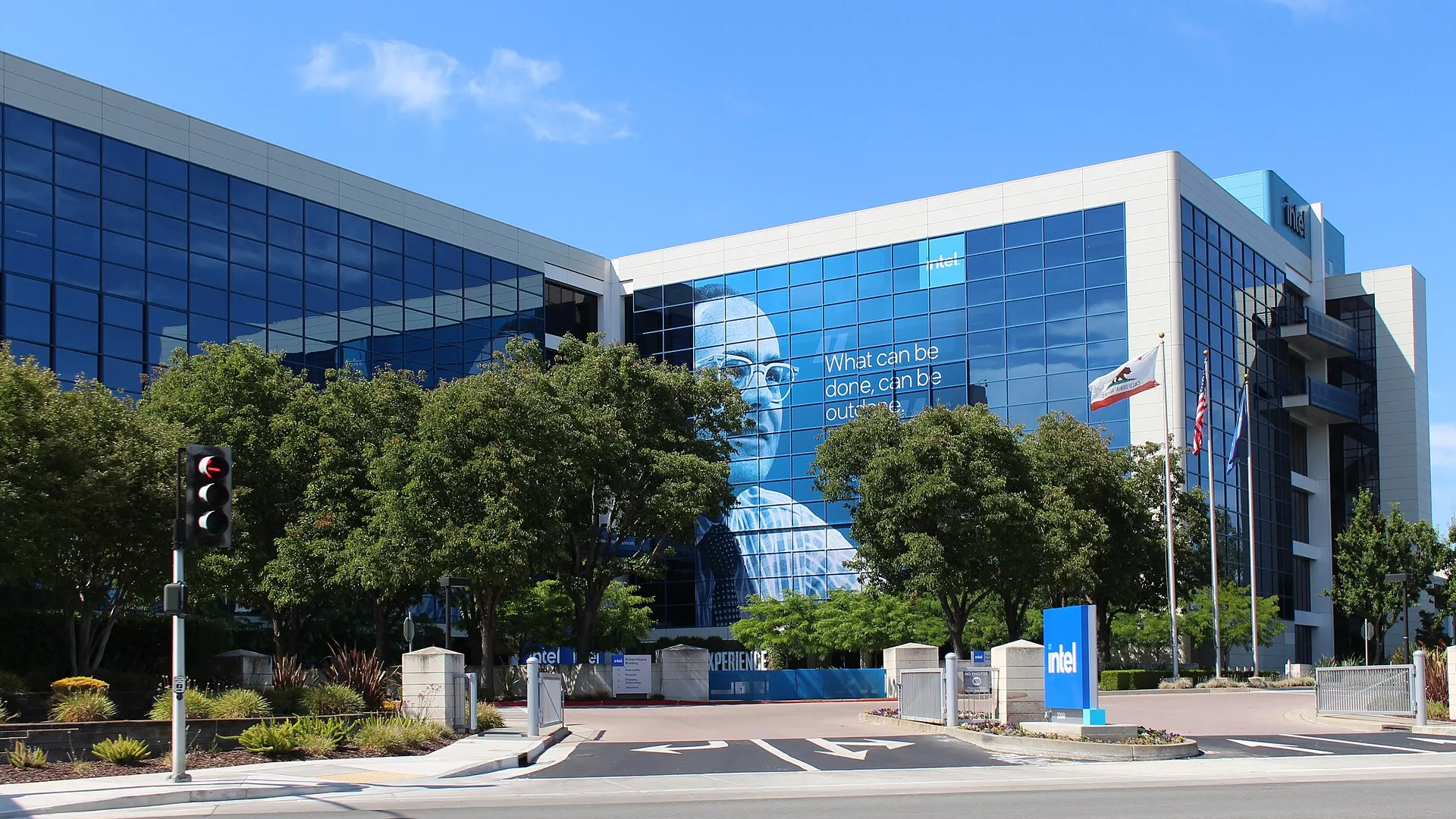
NEW YORK — Intel shares fell 28.6 per cent on Friday, a loss CNBC described as the chipmaker's worst day since the 1970s, after it told investors that fourth-quarter profit and sales would land far below Wall Street forecasts. The drop took about $12 billion off the value of the roughly 10 per cent stake held by the United States government, CNBC reported.
The slide helped pull the Nasdaq Composite down 747.73 points, or 2.86 per cent, to 25,437.00, its largest one-day percentage fall since June 5, according to Reuters. The S&P 500 lost 140.32 points, or 1.82 per cent, to 7,580.07, and the Dow Jones Industrial Average fell 572.25 points, or 1.09 per cent, to 51,770.31.
Friday was the second session running in which investors punished one of America's biggest companies over what it is spending on artificial intelligence. Alphabet had its worst day on record on Thursday, falling 12.6 per cent and shedding about $500 billion in market value after a quarter in which search advertising sales fell short, NBC News reported. By Friday's close, NBC said, more than $1 trillion in value had been erased from technology shares.
Intel guided to adjusted earnings of 25 cents a share on revenue of $15 billion to $16 billion for the current quarter, CNBC reported, against LSEG estimates of 43 cents on $17.1 billion. The company pointed to softness in the personal computer market and to a shutdown at a plant in Israel, where an explosion earlier in October killed two workers and injured a third. Intel expects that to cost it about $600 million in lost revenue over two quarters, according to CNBC.
"We see the PC slowdown continuing at least through the first half of next year," Intel's finance chief, David Zinsner, said.
Chief executive Lip-Bu Tan, who was hired in March 2025, described the explosion at the Israeli site as an "unfortunate and tragic accident". He also said: "I'm disappointed that we were not able to meet strong customer demand in this quarter."
The fall came after an extraordinary run. Intel had gained about 150 per cent this year before Thursday's results, according to CNBC, and NBC News reported that the government holding is still up 280 per cent even after Friday's losses. Nvidia, which also owns Intel shares, saw about $6 billion wiped from the value of that holding, CNBC reported. Nvidia's own shares fell 4.2 per cent.
Analysts split on what the numbers meant. D.A. Davidson cut Intel to neutral from buy in a report titled "Not fixed yet", writing that it was "hard to justify the current multiple when weakness is so significant". Citigroup analysts called the quarter "two steps forward, one step back", according to NBC News.
Amazon closed 1.41 per cent lower after a third-quarter report that missed on both revenue and earnings. The stock had fallen as much as 10 per cent in after-hours trading on Thursday before recovering most of the ground. Amazon Web Services brought in $45.98 billion, above the $45.29 billion that LSEG had expected, The National reported.
The spending figures were what unsettled investors. Amazon burned more than $42 billion of cash over the 12 months to September, roughly double its previous record set in 2022, and posted negative free cash flow for a second straight quarter. Chief executive Andy Jassy told analysts: "We still expect 2026 cash capex of approximately $220 billion."
The selling spread across the chip sector. The Philadelphia semiconductor index dropped 7.2 per cent and was heading for a monthly loss of more than 15 per cent. AMD fell 10.9 per cent, Qualcomm about 11 per cent and Broadcom more than 5 per cent. Dell lost 10.8 per cent and HP 9.6 per cent. SanDisk fell 13 per cent, and Nebius and CoreWeave each dropped more than 10 per cent.
Some strategists argued the reaction had gone too far. "I don't think this is a moment of reckoning," said Matt Orton, chief market strategist at Raymond James, who added that it was "a moment where investors should take a long thought", CNBC reported.
Vijay Valecha, chief investment officer at Dubai-based Century Financial, said the retreat "reflects growing scrutiny of hyperscalers' spending plans", The National reported.
Oliver Pursche, senior vice president at Wealthspire Advisors in New York, said the market was sorting winners from laggards. "Companies that are performing and meeting the very lofty expectations that have been set are doing well," he said.
For October, the Nasdaq ended about 5.3 per cent lower and the S&P 500 fell 0.94 per cent, while the Dow gained 1.7 per cent. The S&P 500 technology sector recorded its largest monthly percentage loss since March 2025 and communication services its biggest since April 2022. The Nasdaq Composite closed 7.8 per cent below the record it set on October 6.
Jassy told analysts that Amazon expects to spend "meaningfully more in 2027". He put AWS at a $184 billion annualised revenue run rate and said the unit can grow more than 40 per cent in each of 2027 and 2028, TechCrunch reported.
Sources
- Intel stock has worst day since 1970s, wiping about $12 billion off government's stake (CNBC) (cnbc.com)
- AI pressures mount as Amazon and Intel shares tumble (The National) (thenationalnews.com)
- Intel shares plunge 28.6% as U.S. stocks suffer broad selloff (Honolulu Star-Advertiser) (staradvertiser.com)
- Tech stocks wipe out $1 trillion in value as concerns deepen about the AI boom (NBC News) (nbcnews.com)
- Alphabet shares record their worst day ever, shedding $500 billion in value (NBC News) (nbcnews.com)
- AWS will be a $1T business, Jassy says - but first, it will spend big (TechCrunch) (techcrunch.com)
This report was compiled from the publicly available reporting listed above. Direct quotations are reproduced as published by those outlets. Corrections: see our corrections policy.