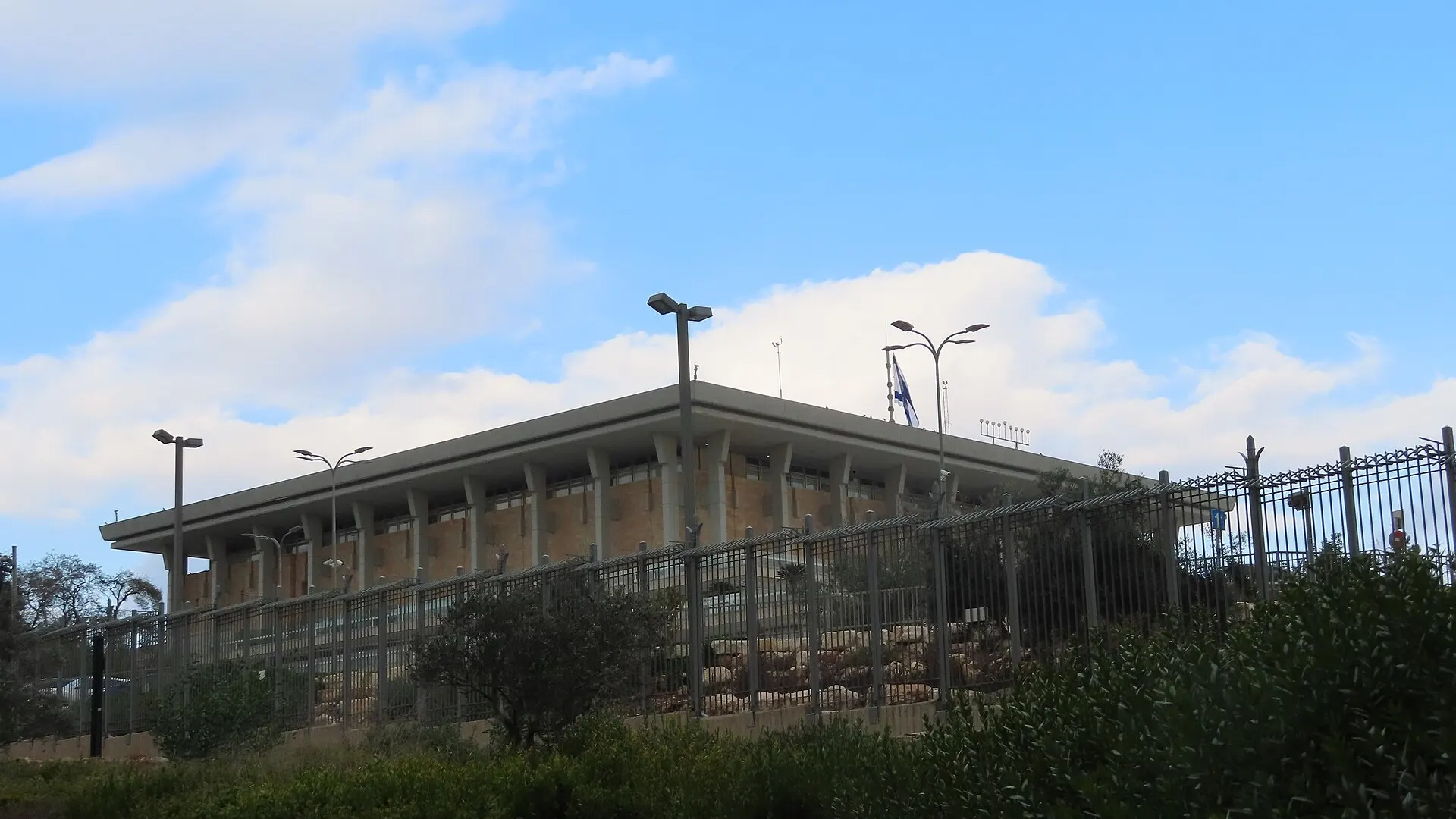
JERUSALEM — Israelis began voting on Tuesday in a parliamentary election that will decide whether Benjamin Netanyahu stays in office after three years of war, with polling stations opening at 7 a.m. local time at 12,018 sites across the country.
The ballot for the 120-seat Knesset is the first national vote since the Hamas-led attacks of October 7, 2023. The last surveys published before Israel's pre-election blackout put Gadi Eisenkot's new centrist party, Yashar, ahead of Netanyahu's Likud, and left both of the main blocs short of the 61 seats a government needs.
That arithmetic means the count is unlikely to settle who governs. A candidate nominated to form a government has 28 days to put a 61-seat coalition together, a period the president can extend by up to 14 days, and Israel votes again if the attempts collapse, Al Jazeera reported. Tani Frank of the Shalom Hartman Institute told the Jewish Telegraphic Agency that the likeliest outcome was deadlock, and raised the possibility of another election, as happened in 2019 and 2020.
The Central Elections Committee puts the register at 7,331,981 citizens. i24NEWS reported that 450 million ballot papers had been printed, that about 100,000 people were working on the vote, and that the exercise would cost 690 million shekels, about $223 million. Election day is a national holiday in Israel.
i24NEWS also reported that more than 95 percent of stations had opened by the morning, and that forecasters expected rain to intensify towards noon, with thunderstorms, gusty winds, hail and flooding in parts of the Negev and the Judean Desert. Police said about 20,000 officers, Border Police members and volunteers were deployed at polling stations and in the streets around them, the Jerusalem Post reported.
The final polls, published on Friday, agreed on the shape of the race without agreeing on its margin. The Times of Israel reported that Channel 12's Midgam survey gave the opposition 56 seats to 50 for Netanyahu's coalition partners and 14 to the Arab-led lists, with Yashar on 23 and Likud on 21. Channel 13's Madad poll had the opposition on 54 and the coalition on 50, with Yashar on 22 and Likud on 19, against the 32 seats Likud won in 2022. Kan's Kantar poll was the tightest, at 52 to 50. A Maariv survey by Lazar Research put the change bloc on 54 and Netanyahu's bloc on 48.
Several small parties sit near the 3.25 percent threshold, and whether they clear it may decide who governs. The Taub Center estimated that at 70 percent turnout a list would need 165,635 votes to win a seat. Yoaz Hendel's Reservists and New Economic list crossed in two of the four final polls, while Ofer Winter's People of Israel, which Maariv put at 3 percent, failed in all of them.
Netanyahu, 77, has led Israel for close to 19 of the past 30 years. He is on trial on charges of fraud, breach of trust and bribery, and calls the case "a politically motivated witch hunt". Critics have accused him of running to stay out of jail. He has promised there will be no Palestinian state, telling voters that "this place belongs to us", and in a video filmed beside a missile-defence battery he warned Tehran it would face "a devastating blow" if it attacked Israel.
On Monday he denied Israeli television reports that he planned to dismiss the military chief of staff, Eyal Zamir, writing that he did not intend to and that the two would keep working together on security. Defence Minister Israel Katz called those reports a complete fabrication.
Eisenkot, 66, is a former chief of staff of the Israeli military who sat in Netanyahu's war cabinet during the opening months of the Gaza war. France 24 reported that his son and two nephews were killed in Gaza. He has pledged an independent state commission of inquiry into the security failures of October 7, which Netanyahu's government has refused, offering instead a panel half appointed by ministers and half by opposition legislators. "Netanyahu wants a tie, but Israel needs a knockout," Eisenkot said in the campaign's closing days, according to Ynetnews. "We need a decisive victory."
About 1,195 people were killed in Israel in the October 7 attacks and 251 were taken hostage. The Palestinian Ministry of Health says about 74,500 people have been killed in Gaza since.
Thousands gathered in Hostages Square in Tel Aviv on Saturday at a rally called by the October Council, a group founded by the families of captives taken to Gaza, to demand accountability for the failure to prevent the attack. Eisenkot and the Democrats' leader, Yair Golan, attended.
Udi Sommer, who heads the Barak Leadership Center at Tel Aviv University, called the vote "a referendum about Israeli democracy", the Jewish Telegraphic Agency reported.
Neither bloc can reach 61 seats without the Joint List and Ra'am, which the final polls put at a combined 14 to 16 seats. Al Jazeera reported that the Arab-led parties could hold the balance of power, but that most leaders of the Jewish-led opposition have ruled out working with them.
Shas chairman Aryeh Deri voted in the Har Nof neighbourhood of Jerusalem soon after stations opened. A moment of silence was held in Tel Aviv as the polls opened.
Voting ends at 10 p.m. local time, when i24NEWS said it would publish its exit poll.
Sources
- Final polls before election show both blocs short of majority, small parties out of Knesset (The Times of Israel) (timesofisrael.com)
- Israel election: What to know as Netanyahu faces battle for survival after Oct. 7 attacks (NBC News) (nbcnews.com)
- Polls open across Israel as voting begins in pivotal Knesset election (The Jerusalem Post) (jpost.com)
- Israelis head to the polls, casting their votes in the country's first election since 2022 (i24NEWS) (i24news.tv)
- Israelis head to the polls in country's most consequential election in decades (Jewish Telegraphic Agency) (jta.org)
- Israel election enters final 24 hours: Netanyahu's digital blitz, Eisenkot's knockout bid (Ynetnews) (ynetnews.com)
- Israel votes in first election since October 7 attack as Netanyahu faces crucial test (France 24) (france24.com)
- Israel's elections 2026 explained in maps and charts (Al Jazeera) (aljazeera.com)
- Thousands of Israelis rally against Netanyahu gov't days before election (Al Jazeera) (aljazeera.com)
- Israel election poll: Opposition leads Benjamin Netanyahu bloc 54-48 (The Jerusalem Post) (jpost.com)
- Katz, Benjamin Netanyahu deny plans to dismiss IDF chief Eyal Zamir (The Jerusalem Post) (jpost.com)
This report was compiled from the publicly available reporting listed above. Direct quotations are reproduced as published by those outlets. Corrections: see our corrections policy.