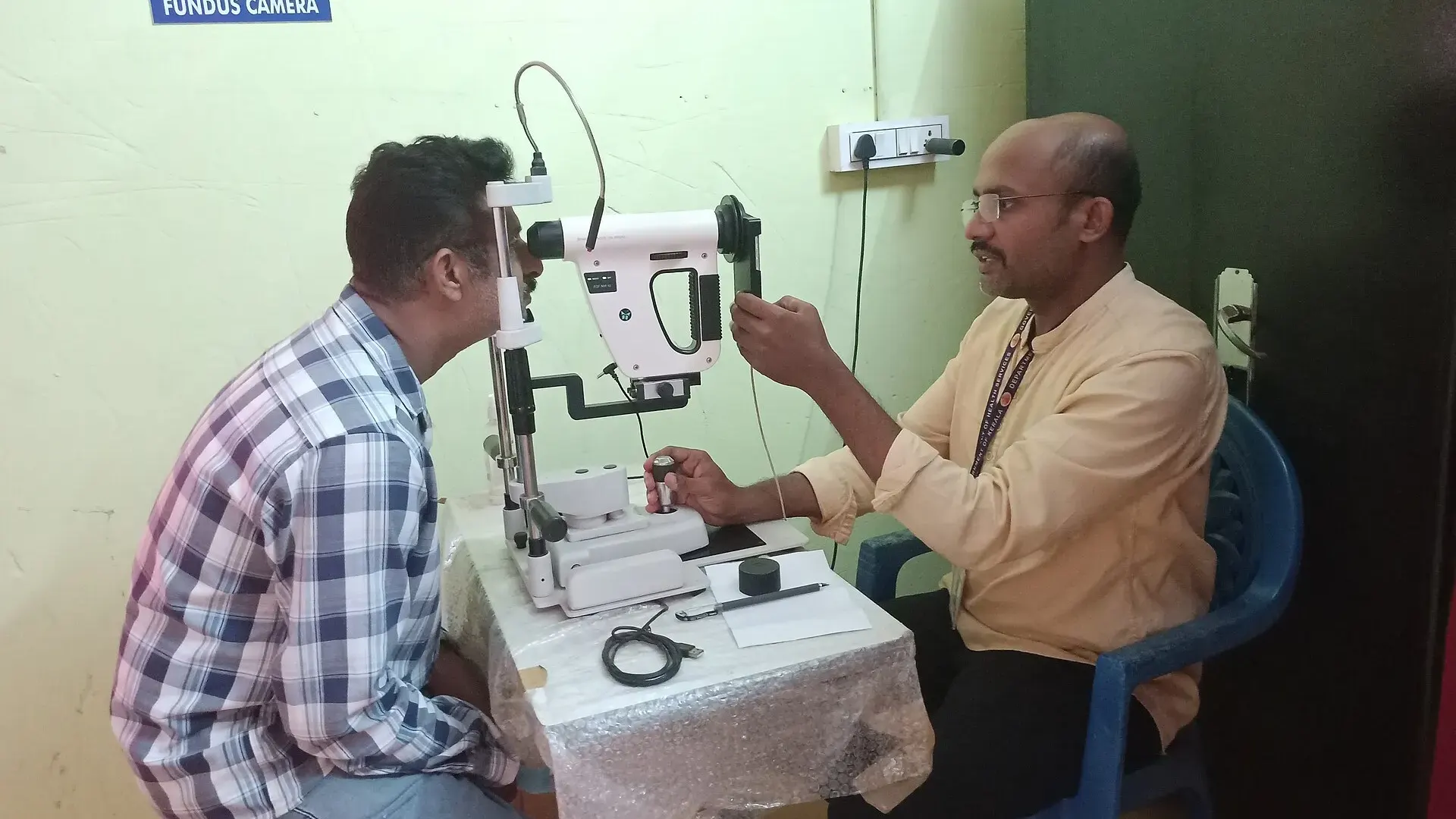
LONDON — People with diabetes in Tanzania whose eye scans were read by artificial intelligence were almost twice as likely to reach a specialist clinic as those screened the usual way, according to a randomised trial published in The Lancet Global Health.
The software returned a result within 30 seconds, while patients in the standard arm waited an average of 23.1 days for results by phone or text. The study, led by the London School of Hygiene & Tropical Medicine (LSHTM) and the Kilimanjaro Christian Medical Centre (KCMC), tested whether medical AI changes what patients do, rather than only how accurately it reads an image.
Of 904 participants found to have referable diabetic retinopathy, 157 of 437 in the AI group (35.9%) attended the central eye clinic at KCMC in Moshi within eight weeks. In the standard group, 85 of 467 (18.2%) did so. The odds of attending were 2.52 times higher with AI-supported screening, the researchers calculated.
Diabetic retinopathy occurs when high blood sugar damages the small blood vessels of the retina, the light-sensitive tissue at the back of the eye. It often causes no symptoms in its early stages and is a leading cause of blindness worldwide. Screening with retinal photographs can catch it before sight is lost, but only if the people who need treatment reach an eye specialist.
The trial enrolled 2,378 adults with diabetes at clinics in 24 hospitals in the Kilimanjaro and Arusha regions between March 2023 and August 2024.
In the AI group, retinal photographs were analysed on a laptop by SELENA+, a commercial system made by Singapore-based EyRIS that works without an internet connection. Patients learned their result and received face-to-face counselling in Kiswahili before leaving the room.
In the standard group, an ophthalmology resident at KCMC graded the photographs later and results were delivered by phone. Almost a third of those patients, 30.6%, did not answer and were sent a text message instead.
"Using AI in a diabetic eye screening programme in Tanzania enabled patients to receive their result along with face-to-face counselling at the point of screening," said Dr Charles Cleland, an ophthalmologist and clinical research fellow at LSHTM's International Centre for Eye Health and the study's lead author.
"In places where healthcare workers are already stretched, these results suggest AI could improve access to specialist care and help prevent irreversible sight loss from diabetic retinopathy," he said in a statement released by the school.
Patients in the AI group who went to the clinic also got there sooner, on average 10.9 days after screening compared with 36.9 days.
Most people working in the study regions are farmers, Dr Justus Rwiza of KCMC, a co-author, said in comments reported by The Telegraph. "They depend on vision," he said, recalling a patient whose daughter had to stop school to help her mother.
Diabetes is spreading quickly in Tanzania. The country's age-adjusted prevalence reached 9.8% in 2024, up from 2.3% in 2011, according to figures cited in the paper. The paper also notes that low-income countries have only 3.6 ophthalmologists per million people, compared with 76.2 per million in high-income countries.
The software performed best where the danger is greatest. It flagged 130 of 131 participants with proliferative retinopathy, the most advanced stage, and had an overall sensitivity of 91.6% for referable disease, according to the paper.
It was weaker at ruling disease out. Its specificity was 67.2%, so many people without referable disease were referred. Among participants without referable retinopathy, 11.1% in the AI group made the trip within eight weeks, against 6.7% in the standard group.
Such false positives add to the burden on already overstretched eye clinics, the authors wrote. Specificity was also lower than a vendor-led evaluation of an earlier version in Zambia had found, they said, urging programmes to check accuracy locally before adoption.
The trial could not separate the effect of the software from that of the instant, in-person counselling it made possible, the researchers acknowledged. And 64.1% of AI-screened patients who needed care still did not attend within eight weeks.
Having health insurance was strongly associated with attending, which the authors said showed cost remains a major barrier. They added that the programme is one of the more established in Africa and KCMC is a tertiary referral centre, so the setting is not representative.
Evidence of this kind has been scarce. The team's review of earlier research found that 72 of 81 studies of AI for diabetic retinopathy in low- and middle-income countries mainly measured the software's accuracy, and only two, including one randomised trial in Rwanda, examined effects on patient flow.
In an editorial on 14 October, Nature Medicine said evidence is still limited on whether deployed AI tools help patients, clinicians or health systems. High scores in retrospective tests do not guarantee benefit unless the tools are woven into clinical workflows, the journal said.
The trial was funded by the British Council for the Prevention of Blindness, Christian Blind Mission and the Sir Halley Stewart Trust. EyRIS provided the software free for academic use.
Tanzania's Ministry of Health, a collaborator on the study, has committed to integrating AI-supported screening into diabetic eye programmes in multiple regions of the country. The authors said formal economic evaluations are needed to establish whether the approach is cost-effective before it is rolled out more widely.
Sources
- Artificial intelligence-supported diabetic retinopathy screening in Tanzania: a randomised controlled trial (thelancet.com)
- AI screening helps more people with diabetes access sight-saving eye care (lshtm.ac.uk)
- AI cuts diagnosis for eye disease from 23 days to just 30 seconds (telegraph.co.uk)
- Making AI work in healthcare (nature.com)
This report was compiled from the publicly available reporting listed above. Direct quotations are reproduced as published by those outlets. Corrections: see our corrections policy.