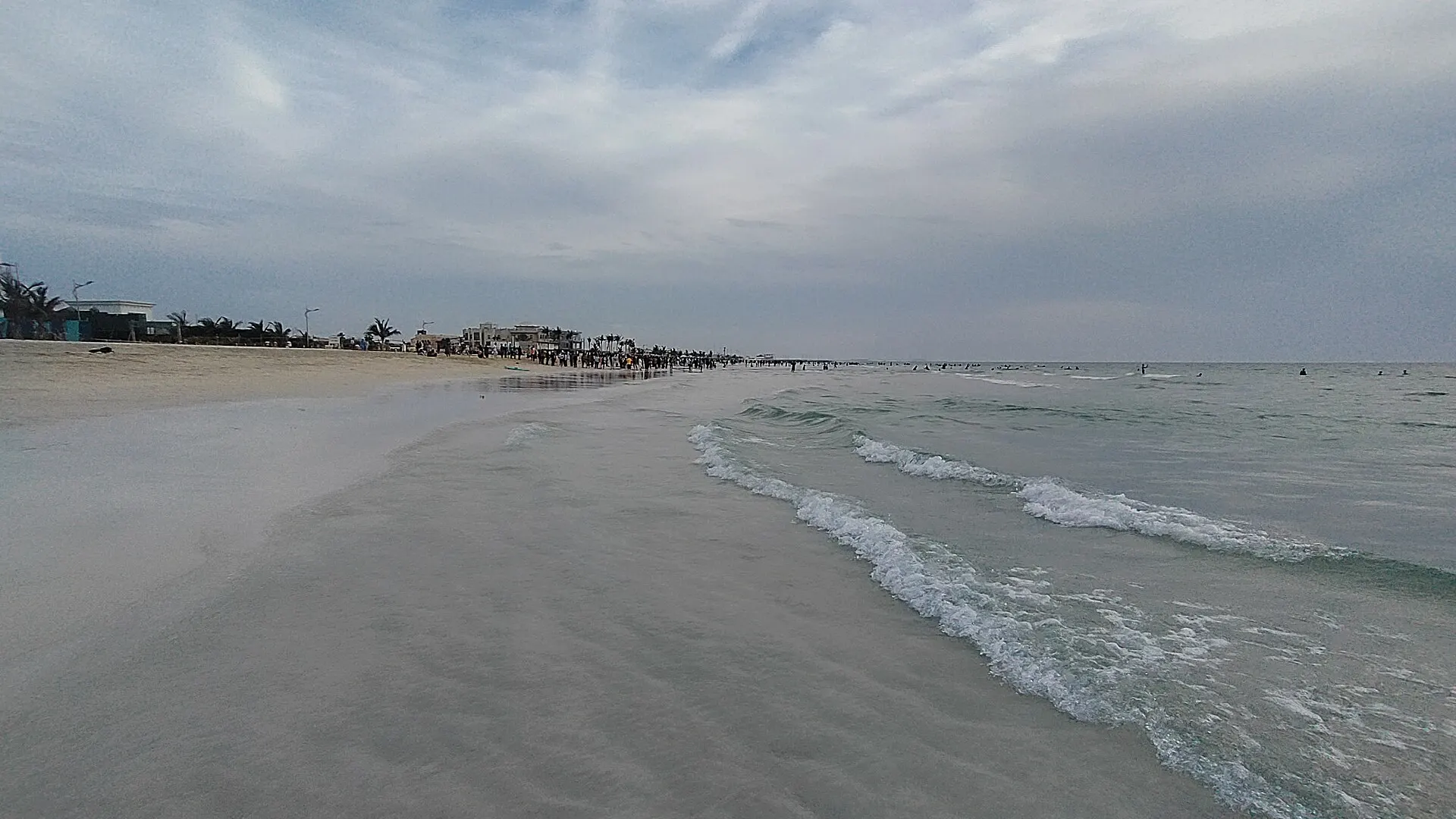
UMM AL QUWAIN — The UAE has closed every beach in Umm Al Quwain after the Ministry of Climate Change and Environment said a tanker oil spill off the coast was behind the fuel-like smell that residents have noticed across the northern emirates.
The ministry said on Friday that its technical monitoring and environmental assessment system had detected the spill and that the resulting marine pollution had reached Umm Al Quwain's shoreline. It said all beaches and coastal areas in the emirate were temporarily closed.
The announcement answers a question that had hung over Sharjah, Ajman and Umm Al Quwain for days. Residents of Dubai and the northern emirates had reported a strong fuel smell in recent days, and federal authorities had said they were looking into where it came from.
The ministry said the odours reported in Sharjah, Ajman and Umm Al Quwain posed no health risk to residents. It advised people to keep away from any oil that washes ashore, according to The National.
Teams from the ministry, working with local and federal authorities, began containing and cordoning off the spill and starting cleanup and remediation work, the ministry said. The aim, it said, is to limit the damage to the marine environment. Coastal surveys, monitoring and impact assessments are continuing. Reuters reported the ministry as saying the survey operations were a precautionary measure to ensure the safety of the marine environment.
The beaches will stay shut until technical teams finish their assessments, determine how far the damage extends and put safety and marine protection measures in place. No reopening date has been given.
Fishermen and other people who work on the water were told to follow official instructions and avoid fishing in affected areas. The Dubai Standard reported that the guidance applies until further notice.
The ministry did not say how large the spill is, how much oil has reached the shore or how long the cleanup might take. It also did not name the vessel. The National said the size of the slick was unclear.
The newspaper reported that international maritime agencies say the tanker Gem No.2, a 330-metre vessel, was struck in a suspected Iranian drone attack on October 9 or 10, and that 22 Indian sailors were rescued from it at the time. The newspaper did not report that the ministry had linked the ship to the spill. The other outlets that covered the ministry's statement did not mention the vessel, and Iran has not been quoted in any of the reports reviewed by Strait.
The spill comes as shipping around the Gulf has been caught up in the regional conflict, and the National tied it to wider concerns about the environmental cost of the Iran war for Gulf and Arabian Sea waters.
Dr Diana Francis, associate professor and head of the Environmental and Geophysical Sciences Lab at Khalifa University, told The National that spills linked to the conflict can cause odours. "When an oil spill happens, it continues to move with the currents unless it is removed and cleaned completely," she said.
Francis said spills can also collect in areas where ocean currents rotate. "Then with time, heat and winds, they evaporate into the air and give off fuel-like odours," she said.
Prashant Kumar, professor of air quality and health at the University of Surrey in Britain, told the paper that smells can carry a long way. "The smell can travel tens of kilometres," he said. He added that the distance depends on the wind speed and the wind direction. That would help explain why residents some distance from Umm Al Quwain noticed the odour.
The ministry published its statement on X, where it said the odours in the three emirates were linked to the spill. It urged the public to rely on official channels for information and to avoid spreading unconfirmed reports. The next marker will be the technical teams' findings on the extent of the contamination, which will decide when Umm Al Quwain's beaches can reopen and when fishing in the affected waters can resume.
Sources
- UAE confirms oil spill off coast causing strong fuel smell (The National) (thenationalnews.com)
- UAE says tanker oil spill affects beaches in Umm Al-Quwain (Reuters via Arab News PK) (arabnews.pk)
- UAE Oil Spill: Beaches in Umm Al Quwain Shut Down as Cleanup Operations Get Underway (Dubai Standard) (dubaistandard.com)
- UAE ministry says tanker oil spill caused 'foul smell' in Sharjah, UAQ, Ajman (ARN News Centre) (arnnewscentre.ae)
This report was compiled from the publicly available reporting listed above. Direct quotations are reproduced as published by those outlets. Corrections: see our corrections policy.