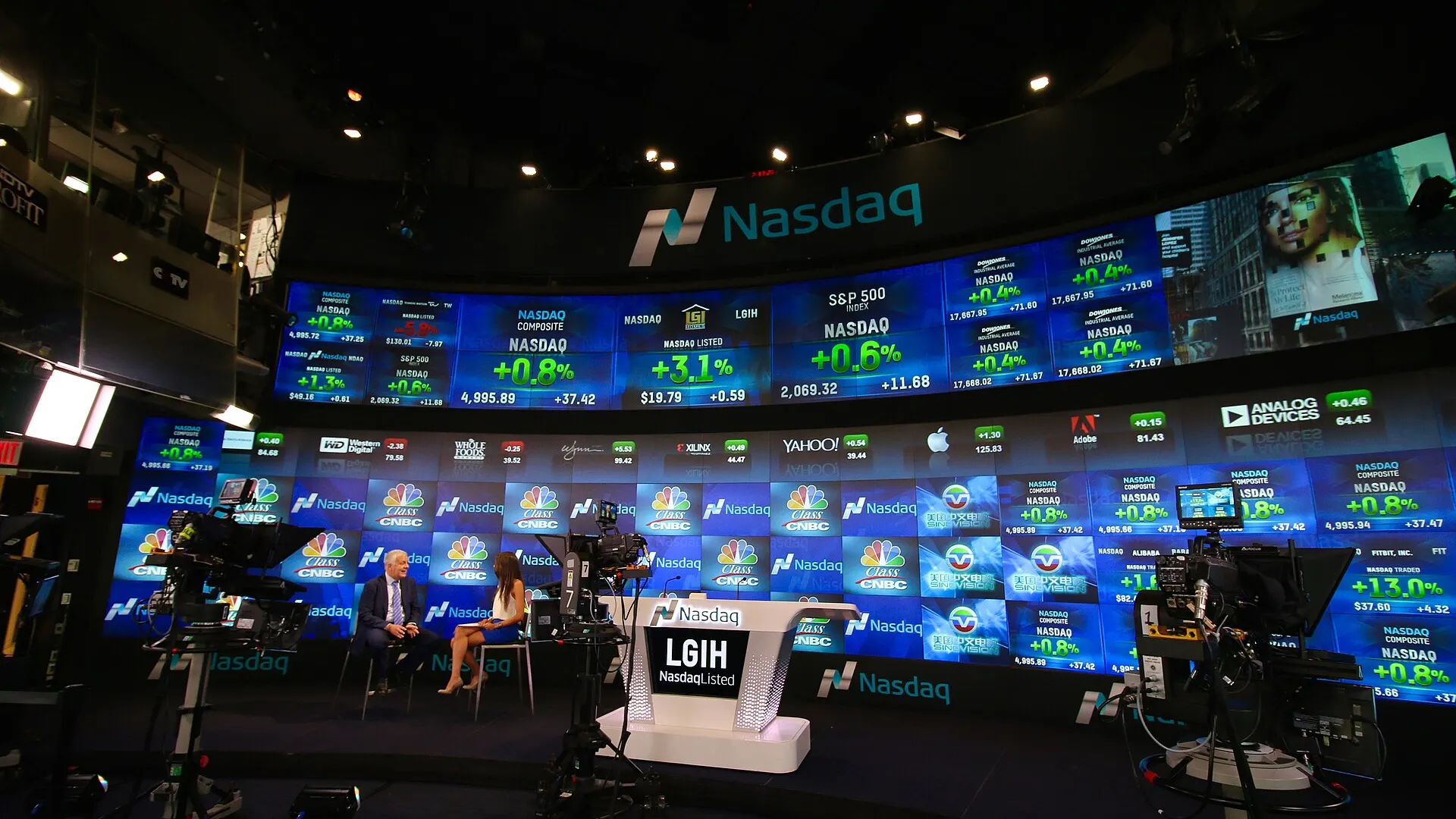
NEW YORK — The Nasdaq Composite fell 2.6% to 26,008.86 on Thursday, its worst session since June, as investors punished Meta Platforms for a quarter of negative cash flow and a bigger bill for artificial intelligence. Brent crude settled at $113.17 a barrel, the highest close since May.
The two moves landed together. Technology shares sold off on doubts that AI spending will pay for itself, while a jump in oil prices tied to the conflict in the Gulf added to the nervousness.
The S&P 500 lost 1.2%, or 93.74 points, to 7,663.43, its worst day since July, according to the Associated Press. The Dow Jones Industrial Average was almost flat, adding 11.89 points to finish at 52,867.98, and two of every three stocks in the S&P 500 rose. The split showed how narrow the damage was: it fell mainly on companies tied to AI.
Meta fell about 7% after reporting third-quarter results on Wednesday. Revenue beat analysts' estimates but profit did not, the AP reported. Reuters said the company burned through cash for the first time in more than a decade, with free cash flow of negative $2.12 billion, against positive $10.63 billion a year earlier.
Meta also raised the low end of its 2026 capital spending forecast to $135 billion from $130 billion, leaving the top of the range at $145 billion. The Seoul Economic Daily reported that the company disclosed $825 billion in AI-related leases and other commitments it cannot cancel, up from the $700 billion it cited in July.
The company said it would create a new class of non-voting Class C shares to help fund its AI investments, Reuters reported. The cost of insuring Meta's debt against default rose to a record on Thursday, according to the same report.
Robert Pavlik, senior portfolio manager at Dakota Wealth, told Reuters that "more spending, negative free cash flow, not enough revenue being generated from the spend" was concerning investors.
Matthew Maley, chief market strategist at Miller Tabak, told Reuters: "It's just becoming more and more evident to people that it's going to take a lot longer."
The pain spread across the chip sector. Nvidia, the largest company on Wall Street, fell 4.4% and was the biggest drag on the S&P 500, the AP said. Lam Research dropped 11.8% even though its summer profit and revenue topped forecasts, because the midpoint of its outlook came in slightly below what analysts had expected. CoreWeave lost 10.1% on concerns about its debt, and Tesla fell 3.1% after revenue came in weaker than forecast.
The Seoul Economic Daily put the Philadelphia Semiconductor Index down 6.7%, with AMD off 8.1% and Micron off 6.3%. Not everything fell. Procter & Gamble rose 5.6% after beating profit expectations, the AP said.
Asian markets also fell. South Korea's Kospi fell 3.5%, Hong Kong's Hang Seng dropped 3% and Japan's Nikkei 225 lost 2.7%. In Europe, France's CAC 40 slipped 1.4%, hurt by rising French government bond yields.
Oil moved the other way. Brent rose 4%, or $4.35, to $113.17, after trading below $97 at the start of October, the AP reported. US benchmark West Texas Intermediate for December delivery closed at $99.47, up 2.39%, according to the Seoul Economic Daily.
The AP tied the rise to the war with Iran and uncertainty about when the energy industry can return to normal. The Seoul Economic Daily pointed to Houthi claims of strikes on the Saudi defence ministry headquarters in Riyadh and on King Fahd International Airport in Dammam. It also cited expectations of renewed US action against Iran after the midterm elections, noting a New York Times report that US and Israeli military planners had drawn up strike options. President Donald Trump was reported to have said Washington was not negotiating with Iran.
Higher crude is a windfall for oil exporters but a cost for fuel-importing economies and for the stock markets that depend on cheap energy. Brent has risen by more than $16 since the start of the month.
Investors sought shelter in government debt. The yield on the 10-year US Treasury note fell to 4.97% from 5.13% the day before and from above 5.30% earlier in October, the AP said.
Attention now turns to the US midterm elections on November 3, which the Seoul Economic Daily linked to expectations of renewed US action against Iran, and to whether other large technology companies give the market a clearer picture of what their AI spending is earning.
Sources
- Steep bill for AI buildout punishes Meta, other tech favorites (Reuters via Investing.com) (investing.com)
- AI stocks drag markets down worldwide as oil prices climb to their highest since May (Associated Press via BNN Bloomberg) (bnnbloomberg.ca)
- Nasdaq Tumbles 2.6% on Meta's $825 Billion AI Spending Pact; Brent Hits $113 (Seoul Economic Daily) (en.sedaily.com)
This report was compiled from the publicly available reporting listed above. Direct quotations are reproduced as published by those outlets. Corrections: see our corrections policy.