DUBAI — Saudi Arabia partially reopened Riyadh's King Khalid International Airport on Sunday, two weeks after a Houthi missile strike there killed 13 people, even as the kingdom's air defences shot down a fresh wave of missiles and drones fired from Yemen and the Houthis warned travellers to stay away.
The reopening came a day after Saudi civil defence said debris from two intercepted missiles had fallen in the Mecca and Medina regions, a claim the Houthis denied, and as the Houthi-run health ministry in Sanaa said Saudi-led air strikes on the Yemeni capital had killed at least 11 people.
The weekend's exchanges show how far the war has spread: it has shut the main airport of the Gulf's largest economy for two weeks, prompted Washington to pull embassy families out of the kingdom and sent missile debris into the two regions that hold Islam's holiest sites.
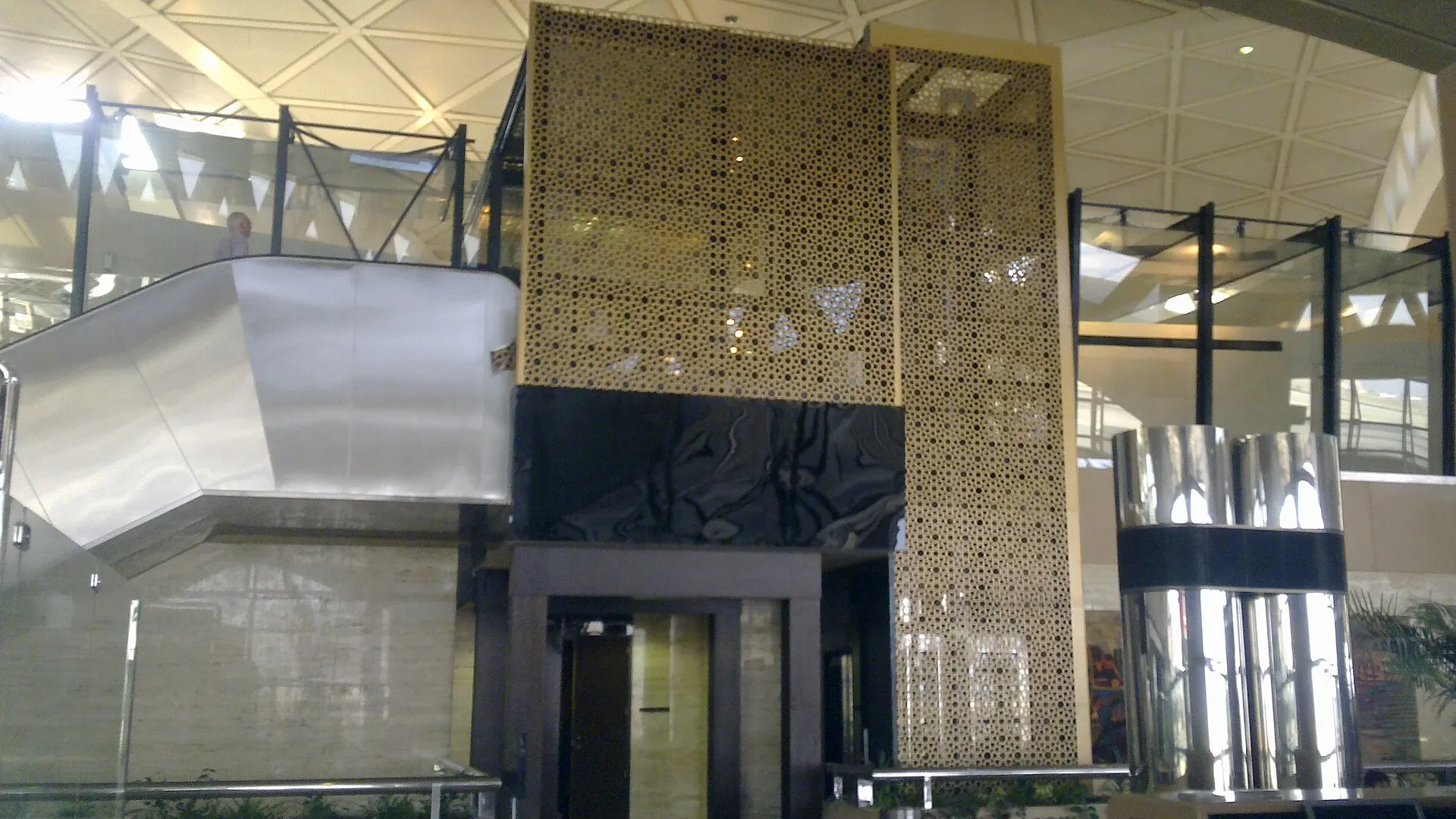
Saudi authorities said Terminal 1 would handle domestic flights and Terminal 2 international services operated by national carriers from Sunday. That leaves two of its five terminals in service, JNS reported, citing Bloomberg. Terminals 3 and 4, which were hit in the earlier attacks, remain closed, according to The New Arab.
Few aircraft were moving at the airport on Sunday, according to Flightradar24 tracking data cited by Reuters. The Saudi-led coalition has said the Houthis attacked the airport 20 times between October 1 and 11. The October 10 strike, which killed 13 people and wounded more than 300, was the deadliest attack inside the kingdom in more than a decade.
Houthi military spokesman Yahya Saree said early on Sunday that the airport was a "military target" that would "never be safe", and urged airlines, staff and passengers not to use it. The Houthis said they fired dozens of ballistic missiles in three attacks on Sunday, including at King Khalid Air Base in Khamis Mushait.
The coalition said its defences destroyed a ballistic missile and two drones aimed at Riyadh overnight, then a cruise missile fired at Khamis Mushait and, by midday, 10 ballistic missiles launched toward the southern region. In all, the coalition said, 12 missiles and two drones were intercepted on Sunday; its spokesman, Maj Gen Turki al-Maliki, gave the breakdown through the Saudi Press Agency, JNS reported.
AFP journalists in Riyadh heard three explosions in the early hours of Sunday as residents received phone alerts warning of a "hostile aerial threat".
Shrapnel from two missiles intercepted over Khamis Mushait and Ahad Rafidah injured a Saudi citizen and an Asian resident and damaged three residential buildings and seven vehicles, the General Directorate of Civil Defence said. "The bombardment has been very heavy since this morning," a Khamis Mushait resident told AFP.
Saturday's barrage reached further north. The coalition said it destroyed two ballistic missiles fired toward Taif and Yanbu, and civil defence said it responded to fragments falling in Wadi al-Mughammas in the Mecca region as well as in Jeddah, Taif and Rabigh.
Jasem Mohamed AlBudaiwi, secretary-general of the Gulf Cooperation Council, called the launches "a grave violation of the sanctity of the Holy Sites", Al Jazeera reported.
The Houthis rejected the accusation. Saree said the group's operations "target Saudi oil facilities and military bases", and listed Riyadh airport, a Saudi Aramco facility in Yanbu, the Rabigh refinery, crude pumping stations on the East-West Pipeline, Dammam and Najran airports and the Khamis Mushait air base as Saturday's targets. Saudi authorities did not comment directly on those claims. Yanbu is the Red Sea terminal through which Saudi Arabia has exported much of its crude around Iran's blockade of the Strait of Hormuz.
In Yemen, the Houthi-run health ministry in Sanaa said at least 11 people were killed and 18 wounded in Saudi-led strikes on two sites in the capital on Saturday. The Houthi broadcaster Al-Masirah said one strike hit a house, killing at least four people, and another hit housing for cement factory workers in Sanaa governorate, killing six women and a child. None of the tolls could be independently verified.
The Houthis also fired on Aden, the interim seat of the Saudi-backed government, saying they struck the Al-Nasr camp and a naval base it said were overseen by Saudi forces. The internationally recognised government's interior ministry said two missiles hit a coast guard headquarters and a third hit a coast guard building in the Tawahi district.
The conflict had been largely dormant since a UN-brokered truce in 2022. Fighting resumed in July, and last month the Houthis seized territory along Yemen's Red Sea coast, including the port of Mocha, bringing them close to the Bab el-Mandeb strait. Saudi Arabia, which intervened in 2015 after the Houthis took Sanaa, has since stepped up its air campaign, and government-aligned forces launched an offensive on October 5 to retake lost ground.
The US embassy in Riyadh said on Sunday that "Iranian-supported Houthis have engaged in hostilities against Saudi Arabia", warning that airports could be attacked and airspace closed. The State Department ordered non-emergency staff and their families to leave the kingdom from October 23, and US government personnel now need special authorisation to use any Saudi airport.
The disruption is reaching beyond aviation. Organisers have moved the 2027 Dakar Rally out of Saudi Arabia because of the security situation, The New Arab reported. The airport has given no date for Terminals 3 and 4 to reopen.
Sources
- Saudi air defences intercept Houthi barrage near Mecca (Al Jazeera) (aljazeera.com)
- Saudis say Riyadh airport partly reopens despite renewed Houthi threats (Reuters, via Al-Monitor) (al-monitor.com)
- Houthis fire missiles at Saudi Arabia as Riyadh airport reopens (The New Arab/AFP) (newarab.com)
- Yemen's Houthis say 11 killed in strikes on Sanaa; Saudis say two missiles shot down (The Times of Israel/Agencies) (timesofisrael.com)
- Houthis attack Yemen's Aden, say Saudi strikes kill 16 (The New Arab) (newarab.com)
- Riyadh airport partially reopens as Houthis, Saudi-led coalition exchange attacks (CGTN/Xinhua) (news.cgtn.com)
- Saudi downs 10 Houthi missiles as Riyadh airport reopens (The New Arab) (newarab.com)
- Riyad's main airport reopens after Houthi missile hits (JNS) (jns.org)
- US warns of escalating security threats in Saudi Arabia as Riyadh airport partly reopens (Anadolu, via aNews) (anews.com.tr)
- Middle East latest: Saudi Arabia hits Houthi ballistic missiles and tunnels in strikes on Yemen (The National) (thenationalnews.com)
This report was compiled from the publicly available reporting listed above. Direct quotations are reproduced as published by those outlets. Corrections: see our corrections policy.