URDA, Spain — A Renfe high-speed train ran into the back of a stationary Iryo service on the Madrid to Seville line near this Toledo province town on Wednesday morning, killing at least 68 people in the deadliest rail accident in Spain since 2013.
The regional government of Castilla-La Mancha confirmed the toll and warned that it could rise. Twenty-four of the dead were aboard the Renfe train, ABC News reported. Esther Padilla, a spokeswoman for the regional government, said 397 passengers were on the Renfe train and 147 on the Iryo service. Spain's transport ministry put the Iryo figure at 146, among them a baby.
Emiliano García-Page, the president of Castilla-La Mancha, said 15 of the injured were in the most serious condition and that about 50 more had been taken to hospital. Fifty-eight people were still being treated in hospital, CBS News reported. Most of the injured were taken to hospitals in Toledo, about half an hour from the crash site, according to NBC News.
Transport Minister Óscar Puente said the preliminary account pointed to a decision by rail controllers that he could not account for. A computer failure knocked out the signalling system along a 63-kilometre stretch of the line at about 8:30 a.m. local time, throwing up a red signal and automatically halting six moving trains, he said. Traffic management then passed to a control centre.
At about 8:36 a.m., Puente said, the control centre authorised the Renfe train to resume its journey without speed restrictions, even though the Iryo train was standing on the track ahead of it. The collision came at 8:53 a.m. Puente said the train could have been running at about 200 kph on that stretch.
He called the order inexplicable and said it broke protocol. "I am not attributing responsibility to anyone, I am just stating the facts," he told reporters, adding that the drivers of neither train were at fault.
The crash matters beyond the death toll because it is the second fatal collision between high-speed trains run by the same two operators on the same corridor in a single year. In January, a Renfe train and an Iryo train collided near Adamuz, in Córdoba province, killing 46 people, according to ABC News and Al Jazeera; CBS News put that toll at 45. Spain's worst recent rail disaster remains a 2013 derailment in Galicia that killed 80 people.
Prime Minister Pedro Sánchez travelled to the site and declared three days of official mourning from Thursday to Saturday. "Today all of Spain is grieving," he said. "It is unacceptable for a country like Spain to suffer two high-speed rail accidents in the same year," he added, promising a firm response if negligence or systemic failure is established.
Health Minister Mónica García said emergency resources were being mobilised with the regional authorities. "It was a high-speed impact, so we are expecting this to be a tragedy," she said.
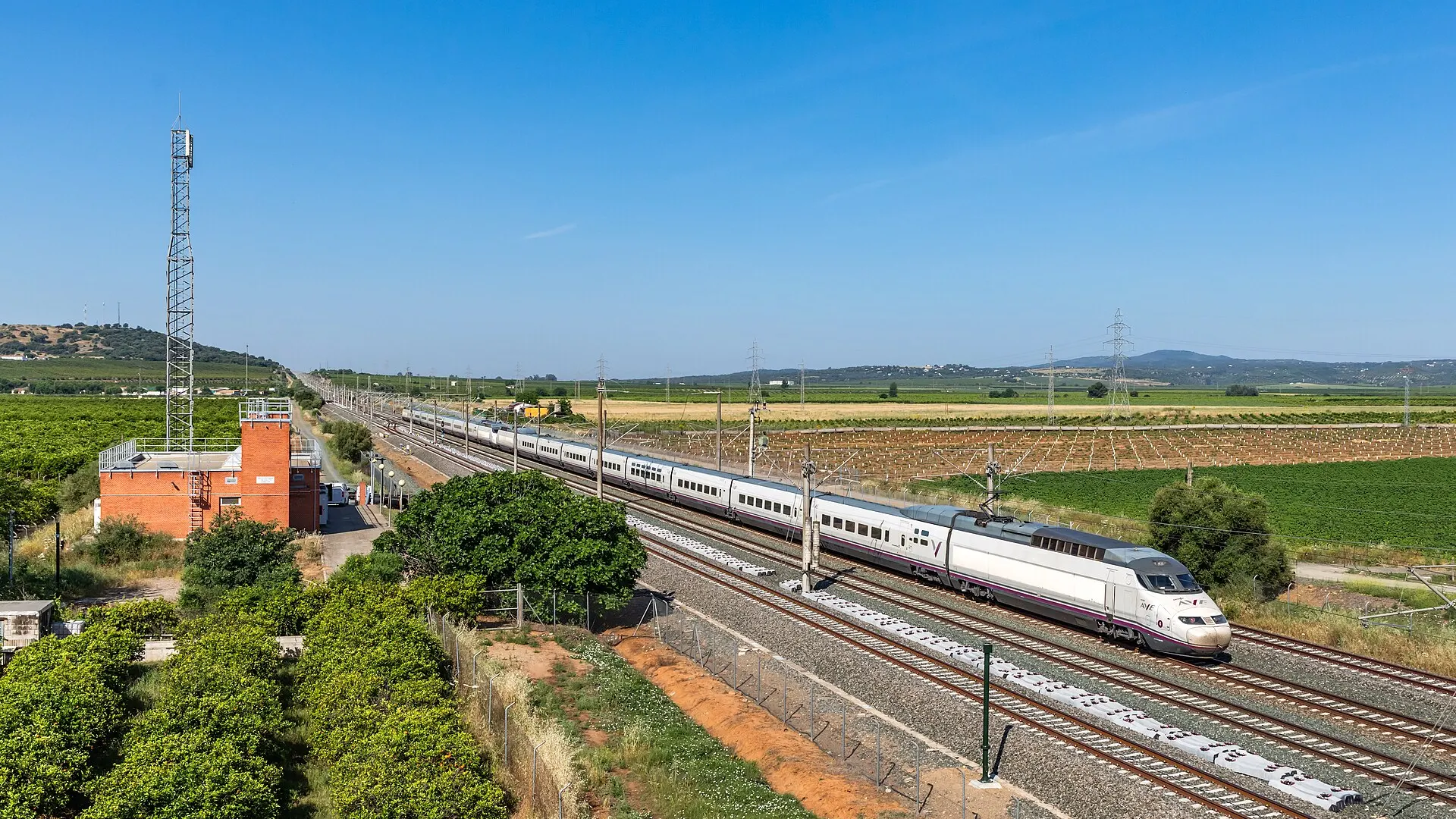
The trains were running in the same direction on a flat stretch of country between Urda and Los Yébenes, according to ADIF, the state infrastructure manager. The impact derailed two coaches, which went down an embankment. Photographs from the scene showed carriages lying on their sides and others twisted.
More than 200 members of Spain's Military Emergencies Unit worked at the site through Wednesday alongside police, who were still searching the wreckage for victims late in the day. Manuel Galán, the mayor of Urda, told state broadcaster TVE that civil protection authorities had asked his town hall to prepare a sports pavilion to attend to passengers. Madrid's mayor, José Luis Martínez-Almeida, sent medical teams and firefighters.
Salvador Arriza, 62, who was in the rear section of the Renfe train, told Reuters his carriage was "completely wrecked, with seats being ripped out." He said he was fortunate to have been facing backwards. "I was lucky because I was in a backward-facing seat, and the impact pushed me into it," he said.
High-speed services between Madrid, Ciudad Real and Andalusia were suspended. Iryo cancelled all departures from Madrid Puerta de Atocha on the southern corridor with no estimate for resuming them.
A Civil Guard disaster investigation team was sent to the site, and an independent railway accident commission will determine the causes. Sánchez said the causes of the January and October crashes appeared unrelated.
The US State Department said several American citizens were injured and that it was working to identify all those involved. European Commission President Ursula von der Leyen said Europe mourned with Spain. King Felipe VI sent condolences to the families.
The crash lands a month before a general election set for November 29, and parties said they would briefly suspend campaigning. The Spanish Union of Railway Drivers has a strike planned for Thursday in defence of railway safety, NBC News reported.
Sources
- High-speed train crash in Spain leaves at least 68 dead, dozens injured, officials say (CBS News) (cbsnews.com)
- Train crash in Spain kills at least 68 people (Al Jazeera) (aljazeera.com)
- Spain train crash: Dozens dead after high-speed trains collide near Toledo (NBC News) (nbcnews.com)
- Inexplicable order probed as cause of train crash that killed at least 68 (ABC News) (abcnews.com)
This report was compiled from the publicly available reporting listed above. Direct quotations are reproduced as published by those outlets. Corrections: see our corrections policy.