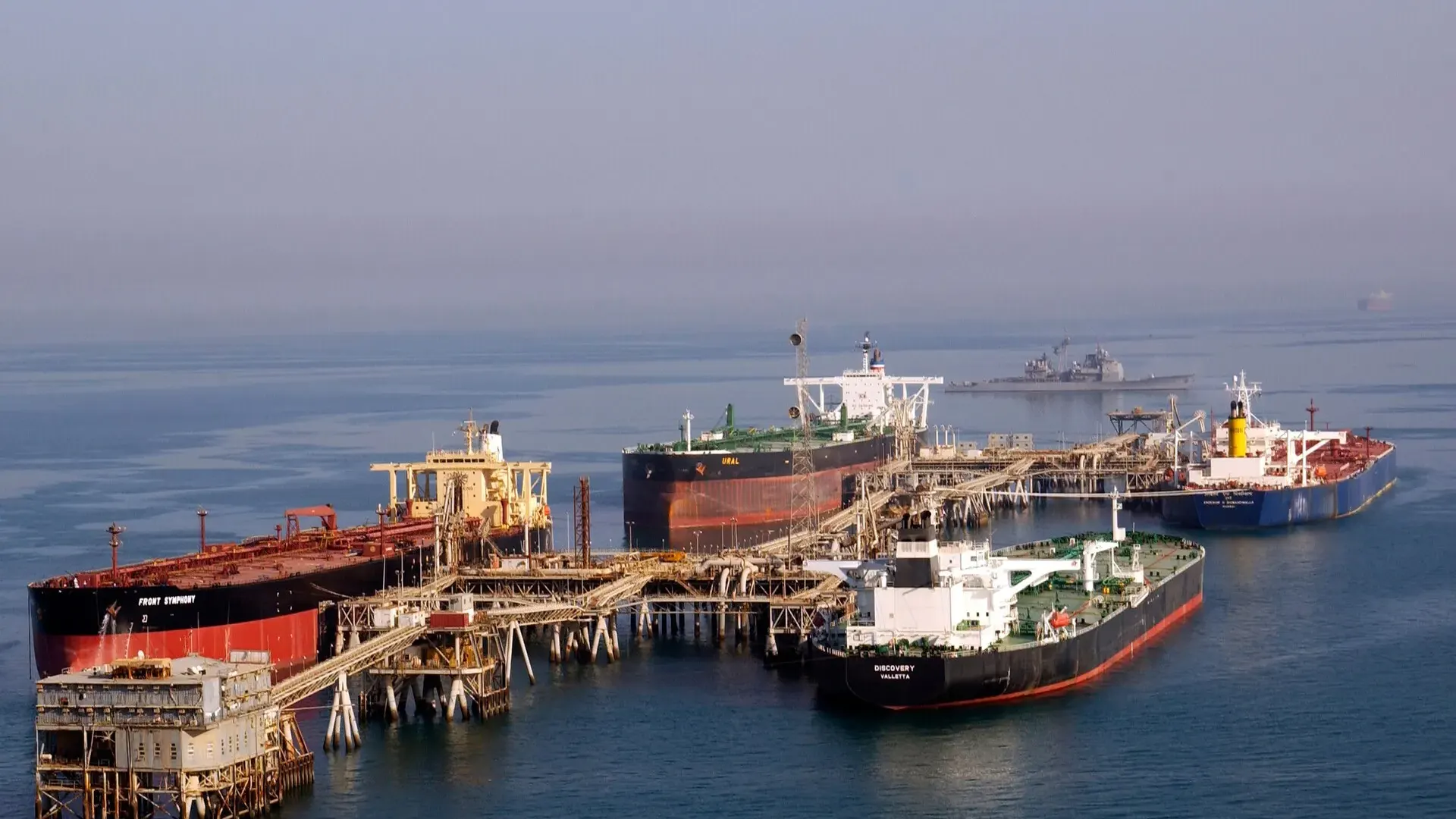
HOUSTON — Brent crude rose above $110 a barrel on Friday for the first time since May and settled at $109.86, its highest close in five months, as Iranian attacks on shipping around the Strait of Hormuz and doubts about Russian diesel supplies kept buyers in the market.
Brent gained $3.94, or 3.7%, on the day, its highest settlement since May 19, according to Reuters. US West Texas Intermediate crude rose $3.44, or 3.5%, to $101.41, its highest close since Sept. 17 and its first finish above $100 in about a month. For the week, Brent gained 4.9% and WTI 10.4%.
The rally shows how little relief eight months of the Iran war have given energy markets, even as governments drain strategic stockpiles and the White House turns to Moscow for diesel. For consumers, it means fuel costs are still climbing less than three weeks before the Nov. 3 US midterm elections.
Both benchmarks had traded lower earlier in the session. Energy Aspects said prices reversed as escalation fears resurfaced amid rumours of attacks on Saudi energy infrastructure, according to Reuters. A Saudi-led coalition said it intercepted a ballistic missile aimed at Yanbu, the Red Sea port Saudi Arabia uses to export crude without passing through Hormuz.
Attacks on shipping around the strait have surged over the past 10 days. Iran has said it is stepping up strikes in response to a US blockade of its ports and tougher sanctions imposed last month, Reuters reported.
"Intensified Iranian attacks drove Gulf crude flows sharply lower," the analytics firm Kpler said in a report, putting flows at about 8.5 million barrels per day on a seven-day average last week, down from more than 20 million bpd the week before. Kpler counted at least 10 confirmed incidents involving commercial vessels over the week and said it expects a slower, more uneven recovery in Hormuz traffic without a comprehensive political deal.
The second supply worry is diesel. Ukrainian strikes have taken much of Russia's refining capacity offline, and on Friday two industry sources told Reuters that Russia's Ryazan refinery had suspended a primary crude distillation unit after a drone attack. Ukraine struck the plant after President Volodymyr Zelenskiy said Kyiv was abandoning a ceasefire on energy sites that President Donald Trump had announced.
Wholesale diesel traded above $200 a barrel in Singapore and around $220 in Europe and the United States, according to The National, and the average US pump price for diesel reached $6.32 a gallon on Friday, up from $6.27 a week earlier. That is the backdrop to Trump's diesel agreement with Russian President Vladimir Putin. Under the arrangement, Russia would initially supply more than 300,000 metric tons of diesel to the United States, with shipments in November and beyond, Reuters reported. As of Friday, no Russian diesel had been identified as reaching the global market, according to NBC News.
Late on Friday Trump also signed an executive order waiving sanctions and tariffs on Russia under the Graham Act, a law he signed last month that provides for tariffs on Russian goods and penalties on countries that buy Russian oil and gas. The measures had been due to take effect next week.
Secretary of State Marco Rubio told reporters on Saturday that the president "wants to take the 60-day period of time to sort of analyze" the effect of the sanctions and tariffs on the US and global economies. "That diesel is going to be sold one way or the other," Rubio said, adding that the only difference was how much of it the United States would receive.
"These conflicts around the world are starting to crash into each other," he said.
Traders are sceptical that Russian barrels will arrive in volume. Dennis Kissler, senior vice president of trading at BOK Financial, told Reuters that "it's questionable how much diesel fuel Russia can actually deliver to the markets." Mason Mendez, a global real assets analyst at Wells Fargo, cited "growing doubts that a U.S.-Russia diesel deal will come to fruition," according to NBC News.
Governments have turned to stockpiles in the meantime. The International Energy Agency agreed on Thursday to release more than 20 million barrels of fuel, and the US Department of Energy on Friday sought proposals for an exchange of up to 17 million barrels of crude from the Strategic Petroleum Reserve, Reuters reported. The IEA has warned that the diesel shortage will persist well into 2027, according to The National.
Not everyone thinks the crude price is justified. "We are not running out of oil, as flows out of the Middle East have largely recovered," Norbert Rucker, head of economics at Julius Baer, told The National, arguing that the Iran war has mainly erased the surplus built up in 2025 rather than tipped the market into deficit.
The sanctions review gives Trump until roughly the middle of December to decide whether the Graham Act measures take effect, and Kpler's next weekly tanker-tracking data will show whether Gulf flows have begun to recover from last week's low.
Sources
- Oil touches $110 a barrel for first time since May on Middle East, Russia supply fears (Reuters) (finance.yahoo.com)
- Rubio says Trump to take up to 60 days to weigh Russia sanctions (Reuters) (yahoo.com)
- Tech stocks erase $1 trillion of wealth as oil surges to $110 for the first time since May (nbcnews.com)
- Oil touches $110 on continued uncertainty over Middle East supplies (thenationalnews.com)
This report was compiled from the publicly available reporting listed above. Direct quotations are reproduced as published by those outlets. Corrections: see our corrections policy.