ATLANTA — The United States has recorded 4,410 confirmed measles cases this year, the Centers for Disease Control and Prevention said on Friday, an increase of 330 in a single week and the highest annual total since 1991.
The figures, current as of Oct. 15, come as the agency prepares to send a field investigator to Pennsylvania, where the largest outbreak in the country has now infected more than 1,260 people and killed at least five, according to the state Department of Health.
The weekly jump of 8.1% was the steepest in several weeks and followed a 5% rise the week before, according to Contagion Live, which tracks the agency's data. The 2026 total is already about 93% higher than the 2,289 cases recorded in all of 2025, which was itself the worst year in more than three decades.
Measles was declared eliminated in the United States in 2000. The Pan American Health Organization is due to review whether the country still meets the criteria for elimination status at its annual meeting in November, and the central question is whether the chain of transmission that began in Texas in January 2025 has continued unbroken for more than a year.
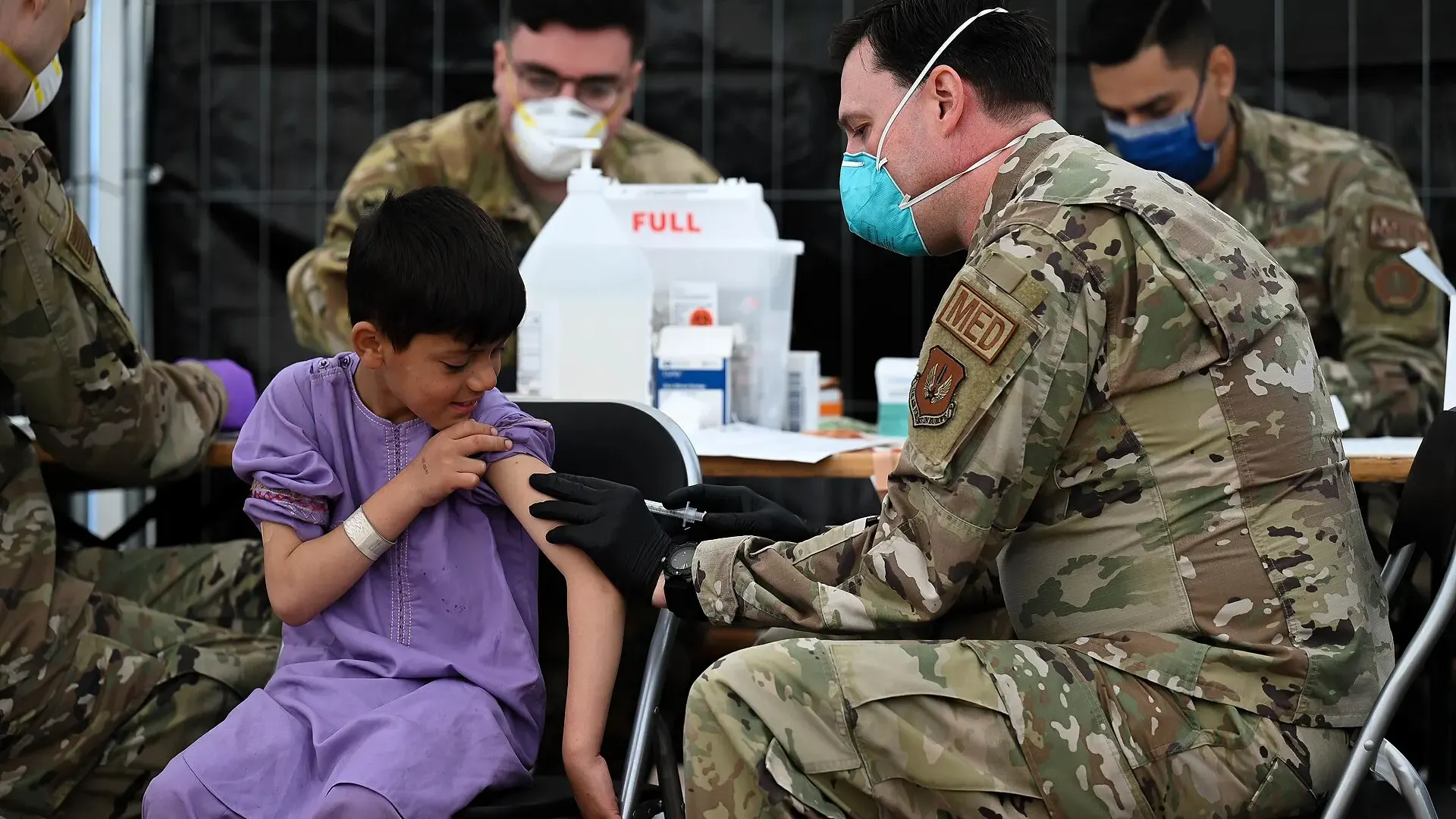
The CDC said 451 people have been hospitalised with measles this year, roughly one in 10 confirmed patients, up from 414 the week before. Children under 5 were the most likely to need hospital care, with 15% of cases in that age group admitted, according to the agency's breakdown. Children and teenagers under 20 account for 59% of all cases.
About 96% of patients were unvaccinated or had no documented vaccination, the CDC said. Roughly 2% had received one dose of the measles, mumps and rubella vaccine and 2% had received two. The agency says one dose is 93% effective and two doses 97% effective.
Pennsylvania is the centre of the crisis. The state Department of Health reported 1,260 confirmed cases across 43 counties on Friday, 38 more than on Wednesday, with 238 people hospitalised. Lancaster County alone had 443 cases as of Oct. 14, followed by Mifflin County with 183 and Chester County with 90, Medical Daily reported, citing state data.
The state has confirmed five measles-associated deaths in 2026 and is reviewing a sixth, a 39-year-old unvaccinated woman from Franklin County whose death the county coroner said meets the state's definition. The CDC's national dashboard, by contrast, lists only two measles deaths for the whole country. The agency last month began counting deaths using National Center for Health Statistics mortality data rather than state reports, a change that Reuters reported has drawn scrutiny.
Fewer than 1% of Pennsylvania's cases are among people who were fully vaccinated, according to the state health department.
Pennsylvania formally requested federal help through the CDC's Epi-Aid programme on Oct. 7, after several weeks of discussions with agency staff, state spokesperson Neil Ruhland said. An Epi-Aid is a rapid, short-term field investigation of an urgent public health problem, typically lasting one to three weeks, and each team must include at least one Epidemic Intelligence Service officer from outside the requesting jurisdiction.
"Pennsylvania has formally requested CDC assistance through the Epi-Aid program," a CDC spokesperson told ABC News. Federal officials have also provided nearly $4 million in one-time funding for the state's response through most of 2027, Medical Daily reported, citing The Philadelphia Inquirer. The investigator's arrival date has not been confirmed.
The request followed a public dispute over how the state's deaths are counted. On Sept. 16, state Health Secretary Debra Bogen wrote to the CDC that Pennsylvania would accept Epi-Aid help if the agency acknowledged the deaths the state had reported, according to Medical Daily. Health Secretary Robert F. Kennedy Jr. has questioned Pennsylvania's death reporting since late August.
Speaking at an unrelated news conference in Virginia on Thursday, Kennedy said Pennsylvania officials "didn't want help from the Trump administration" and that he was "confident I will bring that outbreak to a quick close," ABC News reported. He attributed the outbreak to people who went unvaccinated during the COVID-19 pandemic. The Pennsylvania Department of Health did not immediately respond to ABC's request for comment.
The CDC said Kennedy and CDC Director Dr. Erica Schwartz "continue to recommend the MMR vaccine as the most effective way to prevent measles."
Demand for the vaccine in Pennsylvania has surged. Providers administered more than 56,000 MMR doses in September, against a typical month of about 25,000, and more than 23,000 in the first two weeks of October, according to state figures reported by Medical Daily.
Nationally, coverage has slipped. Some 92.4% of kindergartners received the MMR vaccine in the 2025-26 school year, down from 95.2% in 2019-20, according to the CDC, leaving an estimated 280,000 children in that cohort unprotected.
"This is a disease we know how to prevent," John Brownstein, an epidemiologist and chief innovation officer at Boston Children's Hospital, told ABC News.
The CDC's counts lag state tallies and exclude probable cases, so the national figure is likely to rise again when the agency publishes its next weekly update. PAHO's regional verification commission meets in November to decide whether the United States keeps its measles elimination status.
Sources
- More than 4,400 measles cases reported in US as CDC plans to send 'disease detective' to Pennsylvania (abcnews.com)
- CDC reports 4,410 measles cases as outbreak grows (Reuters) (detroitnews.com)
- Measles Update: October 16, 2026 (contagionlive.com)
- Federal Officials Pledge Pennsylvania a Measles Disease Detective and Nearly $4 Million as Cases Reach 1,222 (medicaldaily.com)
- U.S. Measles Cases Reach 4,410 After 330 New Infections in One Week, Highest Yearly Total Since 1991 (medicaldaily.com)
This report was compiled from the publicly available reporting listed above. Direct quotations are reproduced as published by those outlets. Corrections: see our corrections policy.