KINSHASA — Confirmed Ebola cases in the Democratic Republic of Congo passed 10,000 on Tuesday, the health ministry said, five months into the fastest-growing and deadliest epidemic of the disease in the country's history.
The Ministry of Public Health put the national count at 10,060 confirmed cases and 4,887 deaths. Nearly half of those confirmed infected have died.
The threshold was crossed as the response lost ground on the one measure that normally decides whether an Ebola outbreak can be halted. About 80 per cent of recorded cases are being found outside the contact lists health teams are monitoring, the Associated Press reported, leaving most chains of transmission untracked. The Africa Centres for Disease Control and Prevention treats an outbreak as largely under control only once known contacts account for 95 per cent or more of cases.
Congo declared the outbreak on 15 May. It is caused by Bundibugyo virus, a rare member of the Ebola family with no approved vaccine or treatment.
The disease has reached 66 health zones across eight provinces, up from three health zones when it was declared. Ituri remains the epicentre, with 7,040 confirmed cases recorded there as of 20 October, according to the World Health Organization. Nord Kivu had 2,146 cases and a fatality rate of 55.9 per cent, the highest of the four provinces for which the agency published figures, while Haut-Uele had 421 and Tshopo 76. It gave no counts for the four other affected provinces, which make up the rest of the 9,704 cases it had logged by then.
Much of the dying is happening away from clinics. Half or more of the recorded deaths involved patients who never reached a treatment centre, the Associated Press reported. The WHO said 307 of the 482 deaths added since its previous update on 8 October occurred in communities rather than in care.
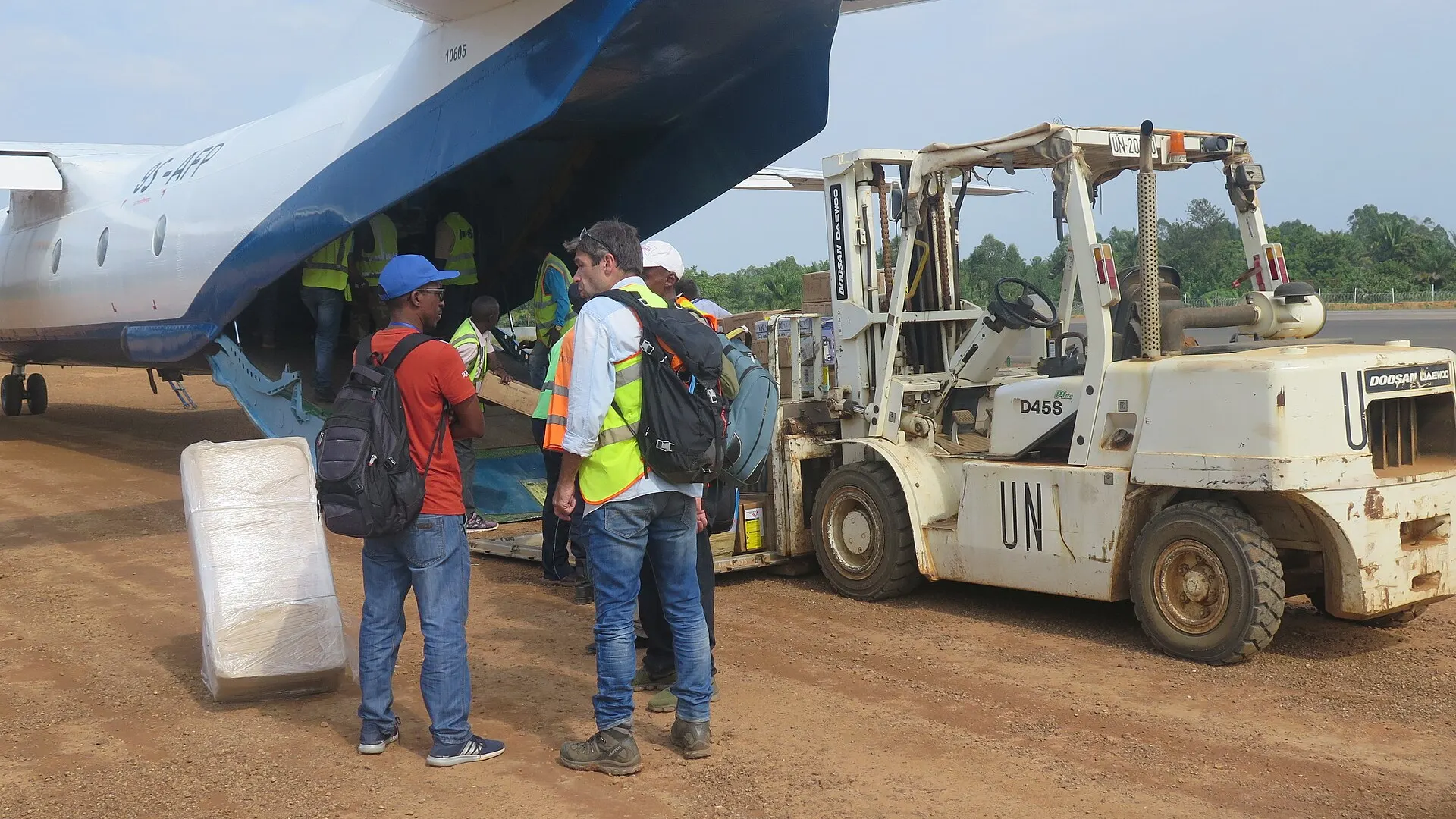
Some treatment centres are overwhelmed, and remote or newly affected areas are short of supplies and staff. Al Jazeera reported that maternal deaths doubled in some provinces as routine services including childhood immunisation were disrupted, and that responders in Ituri's Nia Nia health zone stopped work last week over bonuses owed since late August.
Health teams are also being attacked. A nurse was killed and a colleague severely hurt on Saturday while responding to an Ebola alert in Bafwasende, in Tshopo province, the WHO said. Local authorities have not commented and have identified no suspects, Africanews reported.
"Everyone working to protect communities from this deadly disease must be able to work in dignity and safety," WHO Director-General Tedros Adhanom Ghebreyesus wrote on X. "Healthcare must always be protected." Mohamed Yakub Janabi, the organisation's regional director for Africa, said misinformation and fear must never fuel violence.
Julien Harneis, the UN senior Ebola response coordinator, called for a thorough investigation.
It was not the first such death. A local politician, Marie-Celestin Karondwa, was beaten to death last month after defending the Ebola response on the radio, his party said.
The outbreak is now the second-largest and second-deadliest on record, behind only the 2014-16 West African epidemic, which infected more than 28,000 people and killed more than 11,000.
Cases have been recorded in five countries in all, the Associated Press reported, among them Uganda and France, neither of which has active infections. Kenya has confirmed nine cases and two deaths, all tied to one cluster around a Kenyan man who had lived in Congo for seven years and flew from Kampala to Nairobi on 3 October. Airport screening missed his symptoms and he died two days later at The Nairobi Hospital, NBC News reported. Twenty of his contacts were released from quarantine on Monday after 21 days without symptoms, and 98 remain under observation, the WHO said.
"We ask communities to welcome them home warmly," said Patrick Amoth, Kenya's director general for health.
Uganda has reported 20 cases, most of them imported, and two deaths, with no active infections. Health Minister Chris Baryomunsi said on Sunday that citizens returning from Congo must quarantine for 21 days at their own expense. Nigeria confirmed one imported case in Abuja on 20 October and is monitoring 44 contacts. Swiss authorities said that patient, a woman married to a Swiss diplomat, caught the virus during a September visit to Uganda. She was flown to Switzerland on Monday.
The WHO rates the risk inside Congo as very high and that to its land neighbours as high, and says the assessment is being revised. It advises against travel or trade restrictions.
A vaccine trial began in Bunia on 23 October. The study, named TUMAINI and led by Congolese authorities, is testing Ervebo, which works against the Zaire strain of Ebola but is not known to protect against Bundibugyo. It uses ring vaccination, which targets the contacts of confirmed cases. Four people were immunised at the launch and two rings are in place.
WHO technical advisory groups spent last week assessing two vaccines built specifically against Bundibugyo, the University of Oxford's ChAdOx1, made with the Serum Institute of India, and Moderna's mRNA-1469. The agency will publish its recommendations this week. Meg Doherty, who directs WHO's Department of Science for Health, told journalists in Geneva from Bunia that answers would not come quickly. "We do not yet know for certain when results will begin to emerge," she said. "We expect it will take several months."
Sources
- Ebola cases in DR Congo surpass 10,000 in fastest-growing outbreak (Al Jazeera) (aljazeera.com)
- Congo's Ebola outbreak tops 10,000 cases as authorities race to slow the spread in African countries (Associated Press via NBC News) (nbcnews.com)
- Ebola: 20 contacts released from quarantine in Kenya, amid vaccine hope in DR Congo (UN News) (news.un.org)
- Ebola disease caused by Bundibugyo virus, Democratic Republic of the Congo, Kenya and Nigeria (World Health Organization) (who.int)
- Nurse killed and health worker injured in DR Congo Ebola attack (Africanews) (africanews.com)
- Ebola: UN officials condemn killing of nurse in DR Congo (UN News) (news.un.org)
- What to know about Kenya's first Ebola case and how officials are responding (NBC News) (nbcnews.com)
This report was compiled from the publicly available reporting listed above. Direct quotations are reproduced as published by those outlets. Corrections: see our corrections policy.