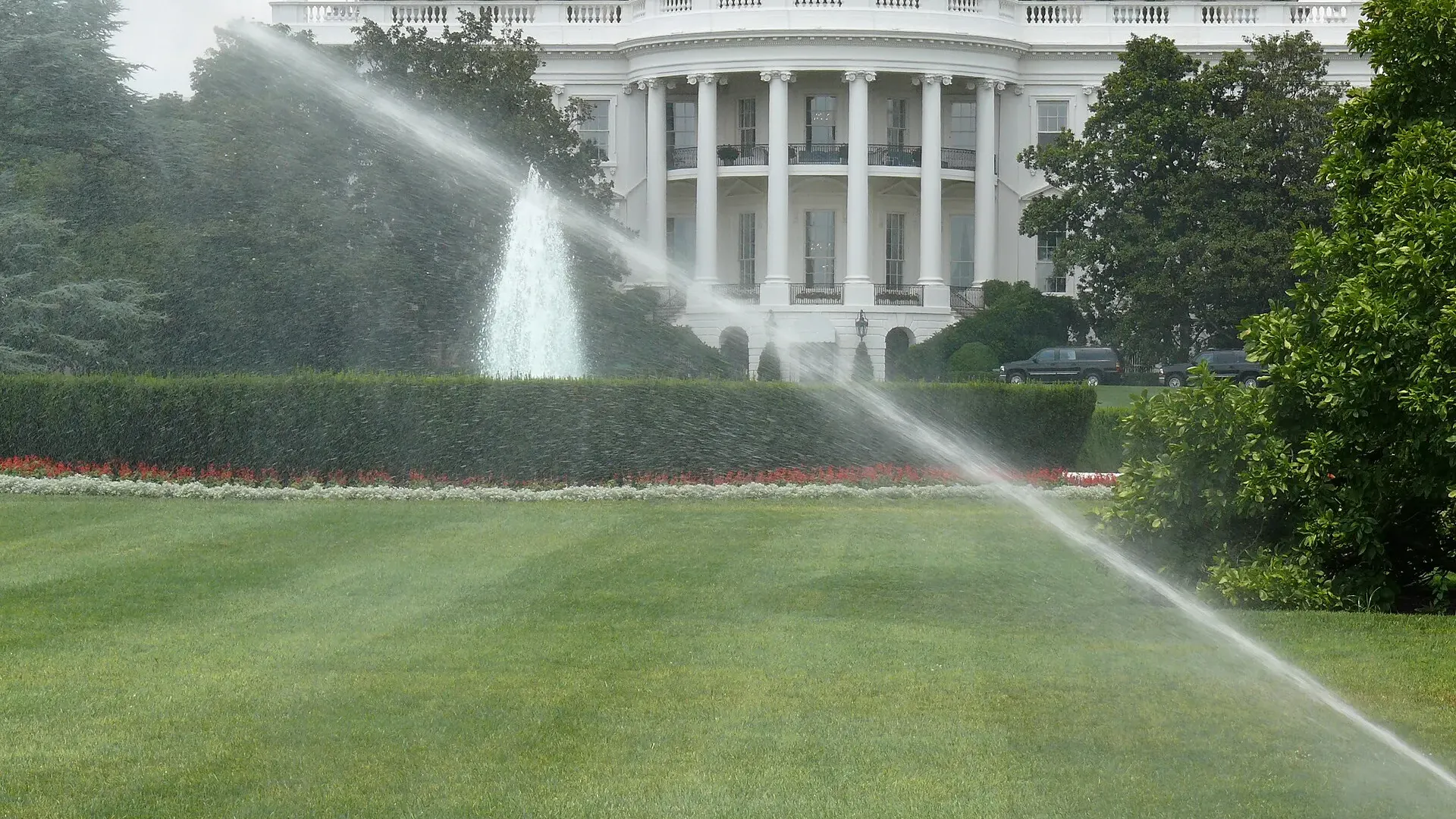
WASHINGTON — President Donald Trump has suspended a sweeping package of sanctions and tariffs on Russia that he signed into law last month, issuing an executive order late on Friday that halted the measures two days before they were due to take effect.
The order waives the main penalties in the Lindsey O. Graham Sanctioning Russia and Iran Act of 2026, which cleared the Senate 86-11 and the House 262-159 in September. Trump said in the order that the waiver "is in the national interests of the United States," according to ABC News.
The decision has drawn unusually open criticism from Republican senators, as well as from Democrats and the Ukrainian government, less than three weeks before the midterm elections on November 3.
The law, named for the South Carolina senator who championed it and who died on July 11, authorised tariffs of up to 100 percent on goods from the biggest buyers of Russian oil and gas, a group that includes China and India. It also provided for tariffs of up to 500 percent on Russian goods and new sanctions on Russian officials, banks and the "shadow fleet" of tankers used to move Russian crude, ABC News reported.
The act contained a provision allowing the president to waive its measures after certifying to Congress in writing that doing so served the national interest. The White House said it had sent Congress the required report.
White House spokeswoman Taylor Rogers said on Saturday that enforcing the sanctions now "would impede ongoing U.S. efforts to negotiate a durable" peace agreement between Russia and Ukraine. "The President retains the ability to exercise these authorities at any time," she said.
Secretary of State Marco Rubio told reporters on Saturday evening, before leaving on a trip to Uzbekistan, that Trump wanted up to 60 days to weigh the economic consequences. The president wants "to analyze their impact on the U.S. and global economy given the pressure on global energy supplies," Rubio said, according to NBC News.
Trump himself offered little detail. "A lot of you don't know what my decision is yet, but we'll figure it out, and you'll figure it out," he told reporters on Saturday. "It's a very good decision, and it's going to be a decision that's good for the country."
On Sunday he wrote on Truth Social that "My decision on Russia is a very simple one," saying he was negotiating peace and did not want to push Moscow away from talks. He also said Ukrainian President Volodymyr Zelensky "doesn't want to end this war, and probably never did," Newsweek reported.
The waiver follows a deal Trump announced on October 9 under which Russia would release hundreds of thousands of tons of diesel onto global markets. The Treasury Department issued a licence allowing Russian diesel imports into the United States through April 7, 2027. Diesel prices have risen almost 70 percent since the war with Iran began in February, according to NBC News.
Several Republicans said the energy argument did not justify the move. Senator Thom Tillis of North Carolina, who is retiring, called the decision "beyond irresponsible" and asked on X: "What part of enforcing a law passed 86-11 by the Senate does the President and his advisers not understand?"
Senator John Cornyn of Texas wrote: "Lindsey would be appalled." Senator Ted Cruz said on Fox News on Saturday: "Look, I wish the president hadn't done it. I think it was a mistake."
Senator Darline Graham, who was appointed to her late brother's South Carolina seat and faces voters in November, told reporters: "Personally, I would choose to keep the pressure on Russia." She said she planned to speak with the president.
Other Republicans defended the president. Senator James Lankford of Oklahoma told NBC's Meet the Press on Sunday: "The president has the ability under the statute to be able to look at national interests." He added: "He's trying to walk this fine balance."
Democrats were blunter. Senate Minority Leader Chuck Schumer said that "by giving the Russian economy life support, Trump's deal with the devil keeps getting dirtier," according to Time. Senator Richard Blumenthal of Connecticut, who helped draft the law, said the waivers "have nothing to do with our national security, and everything to do with sucking up to Vladimir Putin."
In Kyiv, Zelensky wrote on X on Saturday: "The decision to undo all of this, to block all of it, seems wrong to me." He added: "It definitely helps only the Russians." He said the move came as Russian forces struck more than 15 power generation and transmission sites.
Ukrainian Foreign Minister Andriy Sybiha wrote that "Indecisiveness sends the wrong signal to the aggressor. It only prolongs the war," RFE/RL reported.
Energy analysts were sceptical that the pause would deliver much relief at the pump. Tatiana Mitrova, a fellow at Columbia University's Center on Global Energy Policy, told Time that "the potential economic benefit to American consumers looks rather modest" compared with the cost of weakening sanctions pressure.
Congress is in recess until after the election, which limits any immediate response from lawmakers, Al Jazeera reported. The waiver stays in place until the president, or the secretary of state in consultation with cabinet secretaries, decides otherwise, and the 60-day review Rubio described would run into mid-December.
Sources
- Trump signs order waiving Graham Act sanctions on Russia, drawing backlash from some lawmakers and Zelenskyy (abcnews.com)
- Trump doubles down after waiving new Russia sanctions, calling it a 'very good decision' (nbcnews.com)
- Trump Defends Russia Sanctions Waiver Amid Republican Backlash (newsweek.com)
- Ukrainian Officials Slam Trump's Waiver Of Russia Sanctions As Rubio Defends Move (rferl.org)
- What Trump's Waiver of New Russia Sanctions Means for Ukraine (time.com)
- Trump faces bipartisan backlash over Russia sanctions waiver, causing top Republicans to break ranks (foxbusiness.com)
- Trump faces bipartisan backlash over Russia sanctions waiver (aljazeera.com)
This report was compiled from the publicly available reporting listed above. Direct quotations are reproduced as published by those outlets. Corrections: see our corrections policy.