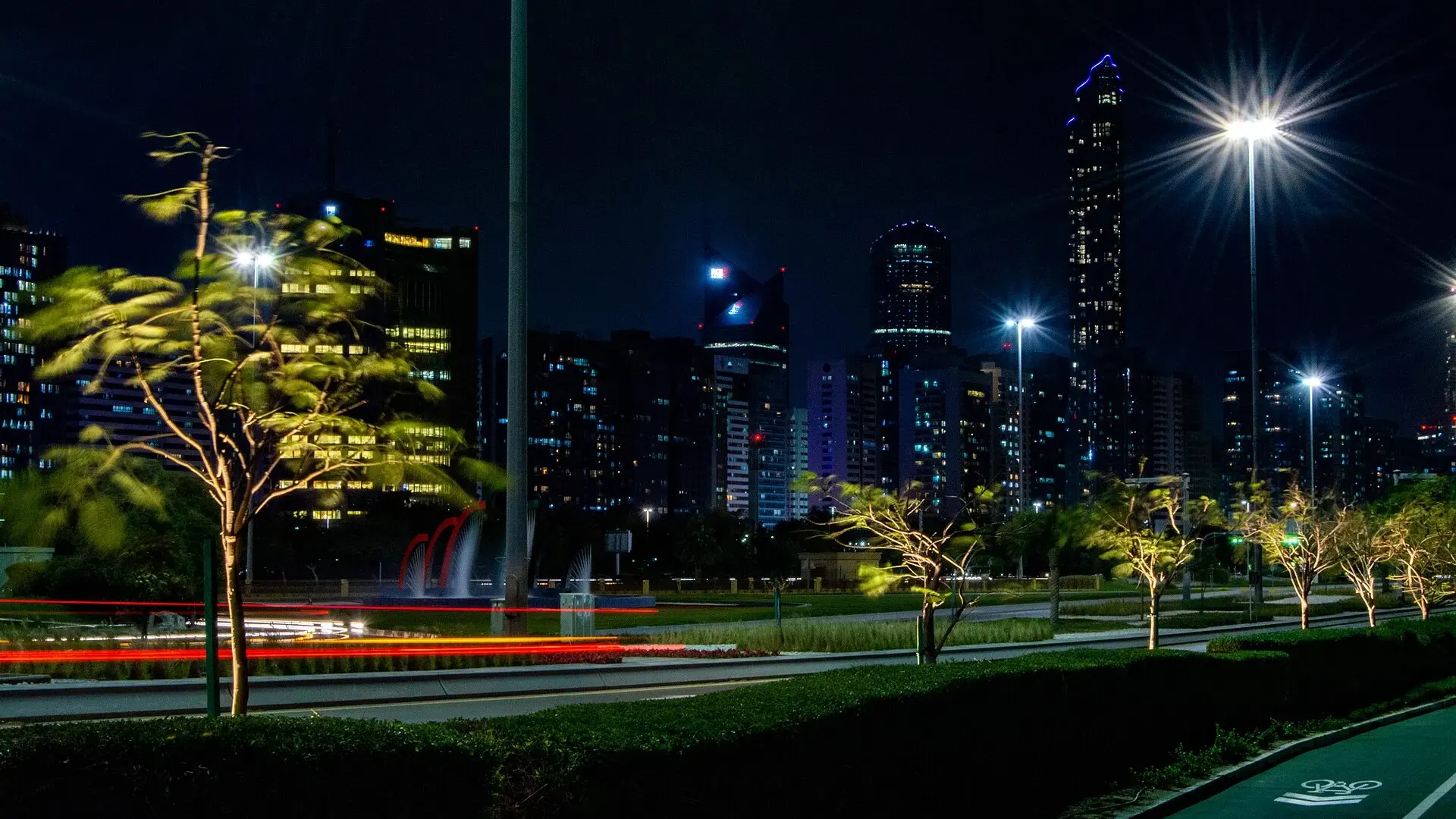
ABU DHABI — The United Arab Emirates has signed a formal agreement to host the 2029 Annual Meetings of the International Monetary Fund and the World Bank Group in Abu Dhabi, the Ministry of Finance said on Sunday, starting three years of preparation for the largest fixture in the global economic calendar.
Mohamed bin Hadi Al Hussaini, Minister of State for Financial Affairs, and Khaled Mohamed Balama, governor of the Central Bank of the UAE, signed the hosting agreement in Bangkok at the close of this year's meetings. World Bank president Ajay Banga and IMF managing director Kristalina Georgieva signed for the two institutions.
The meetings are scheduled for October 2029. They will return to the Emirates for the first time since Dubai staged them in 2003, and the UAE and Turkey remain the only Middle Eastern countries to have hosted the event, The National reported.
The signing gives the Arab world's second-largest economy a date on the world stage at a difficult moment. The IMF said last week that the UAE economy would shrink by 3.9 per cent this year because of the prolonged closure of the Strait of Hormuz, a cut of seven percentage points from its April forecast, before rebounding by 7.7 per cent in 2027.
"The signing of the agreement marks a significant milestone," Al Hussaini said, according to the ministry. He said the decision reflected international confidence in the UAE's readiness and in the efficiency of its infrastructure and financial system, and that the country would keep working with the two institutions on facilities and organisational capacity ahead of 2029.
Banga said the UAE "has built institutions and infrastructure with a spirit of bold ambition and partnership", and called Abu Dhabi "a fitting host for the annual meetings where our focus is on development impact", The National reported.
"The UAE has become an important hub for ideas, finance, innovation and international co-operation," Georgieva said. She said the IMF looked forward to meeting in Abu Dhabi to discuss the challenges and opportunities ahead.
Balama said hosting the meetings showed the strength of the UAE's financial and banking sector and its place as "a key hub in shaping the international financial agenda". The central bank plans to bring its experience in financial stability, financial infrastructure and digital financial services to the 2029 discussions, the ministry said.
Ahmed Jasim Al Zaabi, chairman of the Abu Dhabi Department of Economic Development, pointed to the emirate's institutional strength, regulatory certainty and long-term investment capacity, and described Abu Dhabi as "a trusted centre for global economic and financial dialogue".
The Annual Meetings draw finance ministers, central bank governors, policymakers, economists, private sector executives, civil society groups, journalists and academics from the IMF's 191 member countries. Each edition now attracts more than 10,000 in-person and virtual participants, according to The National, and the agenda covers the outlook for growth, financial stability and policies for inclusive and sustainable development.
The event is normally held at the institutions' headquarters in Washington for two consecutive years and in a member country every third year. The boards of governors of the IMF and the World Bank voted in April to award the 2029 edition to Abu Dhabi, the IMF said in a press release at the time. London was the first city outside the United States to host, in 1947.
Sunday's ceremony followed another gain for the UAE inside the fund. On Friday, Sheikh Maktoum bin Mohammed, Deputy Prime Minister and Minister of Finance, announced that Ali Alhosani had been elected an executive director of the IMF, the first Emirati to sit on the 25-member board. He represents the Arab Group countries and the Maldives, having previously served as the group's deputy executive director.
The backdrop to this year's meetings in Bangkok was the war involving Iran, now in its eighth month, and its toll on Gulf trade and oil flows. In its October World Economic Outlook, the IMF projected that the Middle East and North Africa would contract by 2 per cent in 2026, a downward revision of 3.1 percentage points from April. The fund's forecasts assume the Strait of Hormuz gradually reopens from March 2027 and that conditions return to pre-war levels by October 2027.
"The economy has been resilient, but that resilience is reaching its limits," IMF chief economist Silvana Tenreyro said when the report was released on October 13.
Under the rotation the IMF describes, the next two Annual Meetings are due to be held in Washington before delegates travel to Abu Dhabi in October 2029. The ministry said the UAE would coordinate with the IMF and the World Bank throughout that period to prepare the venues and the organisation needed to host them.
Sources
- UAE signs agreement to hold 2029 World Bank and IMF meetings in Abu Dhabi (thenationalnews.com)
- UAE signs agreement to host 2029 World Bank Group and IMF Annual Meetings in Abu Dhabi (zawya.com)
- UAE signs agreement to host 2029 World Bank Group, IMF Annual Meetings (dubaieye1038.com)
- World Bank Group and IMF to Hold 2029 Annual Meetings in Abu Dhabi, United Arab Emirates (imf.org)
- IMF cuts 2026 growth forecasts for Gulf economies due to prolonged Hormuz closure (thenationalnews.com)
- UAE's Ali Alhosani becomes first Emirati to be elected executive director at IMF (thenationalnews.com)
This report was compiled from the publicly available reporting listed above. Direct quotations are reproduced as published by those outlets. Corrections: see our corrections policy.