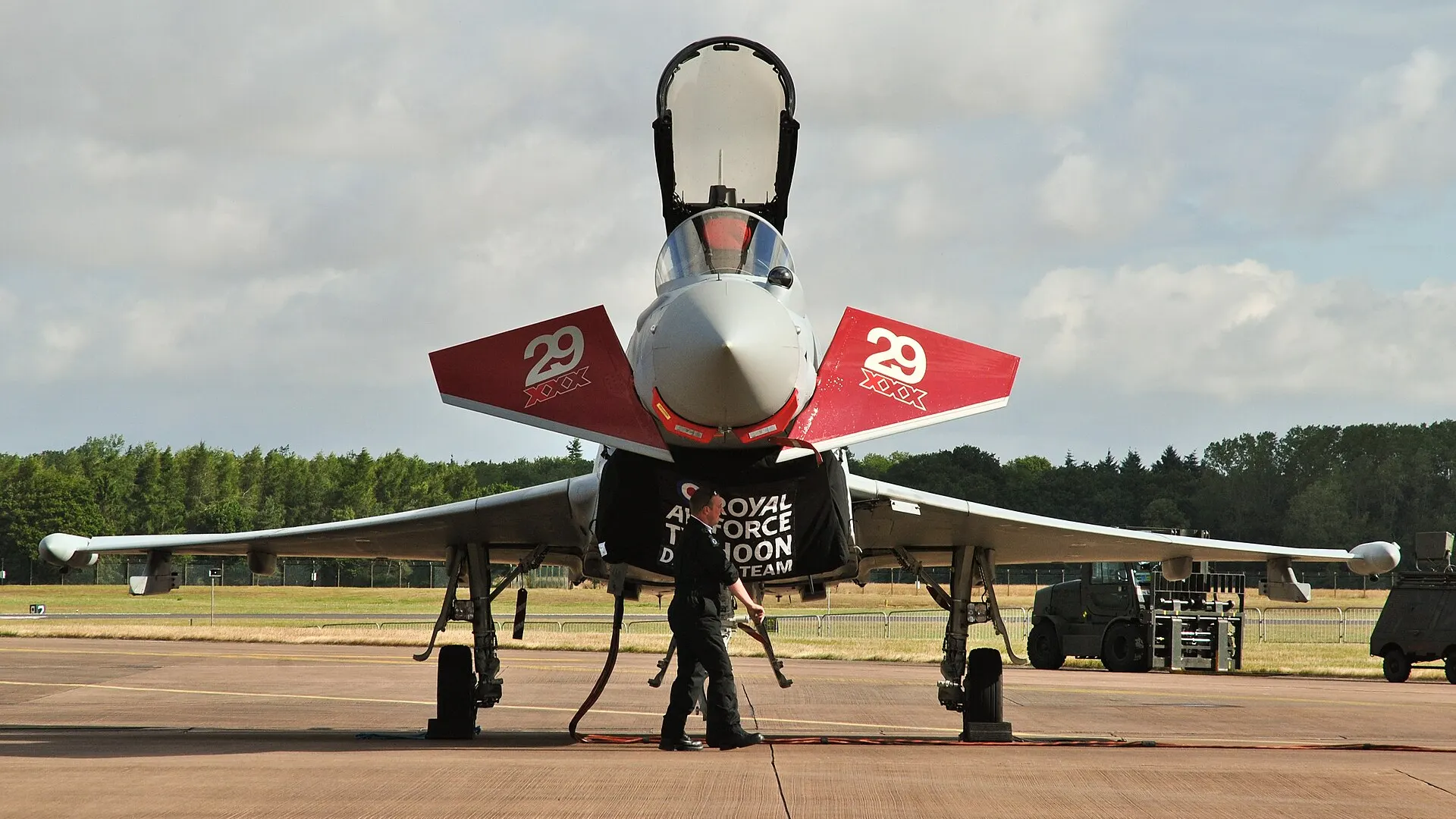
LONDON — Britain will send Royal Air Force Typhoon fighter jets to Saudi Arabia to shoot down Houthi drones and missiles, the Ministry of Defence said on Tuesday, deepening Western involvement in a conflict that has brought repeated strikes on Saudi cities, airports and oil sites.
The move puts British pilots directly into the defence of Saudi skies. It comes as Houthi attacks on the kingdom have intensified, including strikes on oil facilities and Riyadh's main airport, and a day after a Houthi missile strike on a Yemeni government training camp killed at least 73 recruits.
Defence Secretary Wes Streeting said the jets would fly defensive missions only. "The continuing attacks from the Houthis on our ally Saudi Arabia are absolutely despicable," he said. "RAF Typhoons will fly defensive air missions to help protect Saudi airspace from drones and missiles."
Streeting said the aircraft would "conduct defensive counter-air operations over Saudi Arabia," the Associated Press reported, and would intercept airborne threats without hitting Houthi targets on the ground in Yemen. The ministry described the task as flying "defensive counter air missions to support the protection of Saudi cities."
Britain has not said how many Typhoons are going or where they will be based. Alongside the jets, it is sending an A400M Atlas transport aircraft to move military equipment around the kingdom and an unspecified number of military advisers to work with Saudi staff officers, according to the ministry and The Aviationist, a specialist aviation site.
London is also extending for another 90 days its offer of air-to-air refuelling for Saudi aircraft operating against the Houthis, the AP reported. An RAF Voyager tanker has already been refuelling Saudi Typhoons flying air defence patrols. A flight-tracking analyst cited by The Aviationist counted 20 sorties by the tanker, amounting to roughly 187 hours in the air. Britain deployed a Sky Sabre ground-based air defence system to the kingdom in late March.
The decision follows one of the deadliest single attacks of the war. On Monday morning, Houthi forces fired ballistic missiles at the Al Alam military training camp in Shabwa province during a training session. Shabwa governor Awad Ibn al-Wazir told the AP the death toll had risen to 73. More than 200 people were wounded and 14 were still missing, the governor said, according to The National.
The recruits were aged between 18 and 20, according to the AP. Government sources told Reuters that three ballistic missiles struck the camp, The National reported. Rashad al-Alimi, head of Yemen's Presidential Leadership Council, accused the Houthis of "resorting to cowardly terrorist attacks whenever they faced pressure or their plans were thwarted."
The Houthis acknowledged the strike and described the camp as a gathering of "Saudi enemy" forces run by officers from the kingdom. They claimed that Saudi personnel were among the dead and wounded, and said they had also attacked an Aramco facility in Yanbu, the Shaybah oilfield and airports in Riyadh and Abha on Monday. Saudi authorities did not immediately respond to those claims, The National reported.
The violence spread on Tuesday. A Houthi missile hit a residential area of the besieged city of Taiz, killing two teenage girls and wounding six people, local authorities said. UN human rights chief Volker Türk said: "Humanitarian aid must be immediately allowed to enter the city and its passage must be facilitated."
The Iranian-backed Houthis, also known as Ansar Allah, seized the Yemeni capital Sanaa in 2014, and a Saudi-led coalition intervened the following year in support of the internationally recognised government. A truce agreed in 2022 largely held until July, when government forces and the coalition began airstrikes on Houthi-held Sanaa International Airport, according to the AP.
Since then the Houthis have struck deep inside Saudi Arabia. One attack on King Khalid International Airport in Riyadh killed 12 people, according to The Aviationist. Organisers of the Future Investment Initiative, the Riyadh investor gathering known as Davos in the Desert, said on Monday that this year's edition, due on October 26-29, would now take place in 2027, The National reported.
Britain is not the first European country to send fighters. Italy deployed four Typhoons to the kingdom in March, and one of them was hit on September 18 when a Houthi missile struck King Fahd Air Base in Taif, The Aviationist reported.
Al Jazeera's Camille Nedelec, reporting from London, said rising energy prices had helped drive the British decision. "What's happening in the Gulf has a direct impact on people's homes," she said.
The two countries have a long defence relationship, and Saudi Arabia flies Typhoons bought from Britain. Efforts to sell the kingdom 48 more of the jets, on top of 72 ordered in the early 2000s, have stalled, according to The Aviationist. RAF Typhoons based at Akrotiri in Cyprus previously supported US strikes on the Houthis in 2024 and 2025.
Other governments are weighing their own role. Egypt's parliament, which delayed a vote on military support for Saudi Arabia, is due to meet again on October 26, according to state media cited by Al Jazeera.
Sources
- UK to deploy Typhoon jets to help defend Saudi Arabia from Houthi attacks (Al Jazeera) (aljazeera.com)
- UK to send jets to defend Saudi Arabia from Houthi attacks, and other Mideast news (Associated Press via Durango Herald) (durangoherald.com)
- Royal Air Force Deploys Typhoon Fighters to Saudi Arabia to Defend Against Houthi Attacks (The Aviationist) (theaviationist.com)
- Yemen fighting threatens to widen after 73 killed in Houthi attack on training camp (The National) (thenationalnews.com)
- Saudi Arabia postpones FII conference in Riyadh after Houthi attacks (The National) (thenationalnews.com)
This report was compiled from the publicly available reporting listed above. Direct quotations are reproduced as published by those outlets. Corrections: see our corrections policy.