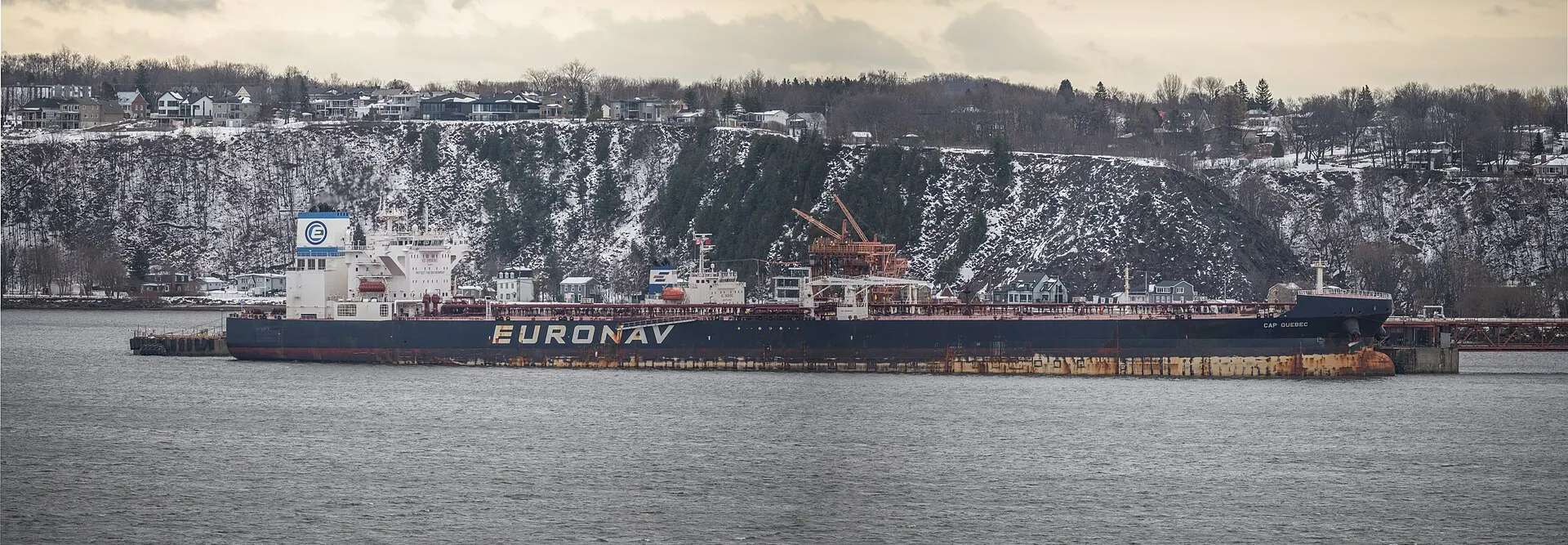
DUBAI — Iran's Revolutionary Guard Navy said on Thursday that seven oil tankers were damaged overnight in and near the Strait of Hormuz, and warned that the conflict would spread to American bases in the region if Washington keeps helping ships through the waterway. The United States called the claim false.
The Guards said four of the tankers were hit and set on fire while transferring oil from ship to ship and that three more struck naval mines west of the strait and were brought to a halt. Iranian state television carried the report, which gave no details on casualties or the flags of the vessels. None of it could be independently verified.
If confirmed, it would possibly be the largest number of vessels damaged in the waterway in a single day since the war began on February 28, when the United States and Israel launched strikes on Iran, according to the Associated Press account carried by PBS. Al Jazeera made the same comparison.
Oil markets reacted. Brent crude rose about 3% to near $112 a barrel, CBS News reported, its highest level since mid-May. A later update in the same report put the gain nearer 4%, at around $113.
The Guards said they had monitored and pursued the four ships, which they said had earlier passed through an illegal route. "All four ships were hit simultaneously and are burning," the Guards said, according to CBS News. The semi-official Fars news agency published the statement at about 4:35 am Eastern time, ABC News reported.
Lloyd's List Intelligence said in analysis cited by PBS that some operators have been moving Gulf oil through the strait at night, in a US military-protected lane near the coast of Oman, with location systems and phones switched off. The oil is then transferred to other tankers waiting in the Gulf of Oman for onward shipment to Asia.
The Guards also repeated their threat to widen the war. Al Jazeera reported that the force said it could strike US bases across the Middle East if Washington moves to help tankers pass through other parts of the strait. If the trend continued, it said, "the conflict will extend to its bases in the region."
Washington rejected the account. President Donald Trump wrote on Truth Social that Iran was "doing everything they can to drive up the price of Oil prior to the U.S. Midterm Election," CBS News reported. He said Tehran was "making up fake hits, mines, and everything else," and argued that more oil was moving through the strait than before the war.
A spokesperson for US Central Command told Al Jazeera the mine claims were incorrect. The spokesperson said American forces had cleared the international shipping lanes of mines, that Iran was attacking with missiles and drones, and that 95% of vessels were getting through.
The British military monitor UKMTO did not report the attacks, Daily Sabah said, although monitors have noted in recent days that some shippers are reluctant to report incidents. That gap means the picture at sea remains unclear, and shipping insurers and traders have so far had only the Guards' account to go on.
Al Jazeera's correspondent in Tehran, Mohamed Vall, said Iranian officials claim full control of the strait and that attacks on ships are increasing daily. Daily Sabah reported that Washington is sending a third aircraft carrier and thousands of troops to the region.
Diplomacy has not stopped, though it has made little headway. Foreign Minister Abbas Araghchi said on Wednesday that Tehran remains open to talks but is ready to defend itself, Daily Sabah reported. Iran has promoted a plan to end the war and fully reopen the strait within a week if the US meets several conditions, including lifting its blockade of Iranian ports. Trump has rejected that proposal, though indirect contacts continue.
The White House sent mixed signals on its own plans. Spokeswoman Anna Kelly said the United States "will not be attacking Iran at any time prior to the midterm elections," and that the blockade "will remain in full force and effect," ABC News reported. ABC also cited two Israeli sources who said the Israeli and US militaries have drawn up plans to renew joint strikes on Iran in the coming weeks, likely after the midterms.
Vall also said there is talk in Tehran of imminent escalation, with Iranians expecting an American attack before the US midterm elections in early November.
Saudi Aramco chief executive Amin Nasser has said flows through the kingdom's East-West pipeline, which bypasses the strait, rose from 2 million to 7 million barrels a day, PBS reported. Saudi air defences intercepted at least five drones on Thursday, according to ABC News.
Sources
- Iran says 7 oil tankers damaged in Strait of Hormuz, and other Middle East news (PBS NewsHour) (pbs.org)
- Iran says seven ships hit in Hormuz Strait, warns US of wider response (Al Jazeera) (aljazeera.com)
- Iran War Updates: Trump accuses Iran of making up fake strikes on ships to drive up oil prices (CBS News) (cbsnews.com)
- Return to US-Iran war looms after 7 tankers damaged in Hormuz (Daily Sabah) (dailysabah.com)
- Iran live updates (ABC News) (abcnews.com)
This report was compiled from the publicly available reporting listed above. Direct quotations are reproduced as published by those outlets. Corrections: see our corrections policy.