GREENBELT, Maryland — NASA's Nancy Grace Roman Space Telescope is producing images nearly 30 percent sharper than its engineers predicted, the agency said, after a series of fine adjustments to the observatory's mirrors brought its main camera into focus about six weeks after launch.
The Wide Field Instrument, the 288-megapixel near-infrared camera at the heart of the mission, now shows an optical error of 63 nanometres, according to a NASA update posted on 14 October. The requirement was about 90 nanometres, roughly a thousandth of the width of a human hair.
The result matters because every one of Roman's planned sky surveys runs through that single instrument. Its measurements of dark energy, dark matter and distant planets depend on how cleanly the telescope can resolve faint light across wide patches of sky.
"All of Roman's sweeping surveys will rely on the Wide Field Instrument," Dave Hickey, a systems engineer for the instrument at NASA's Goddard Space Flight Center in Greenbelt, Maryland, said in the update.
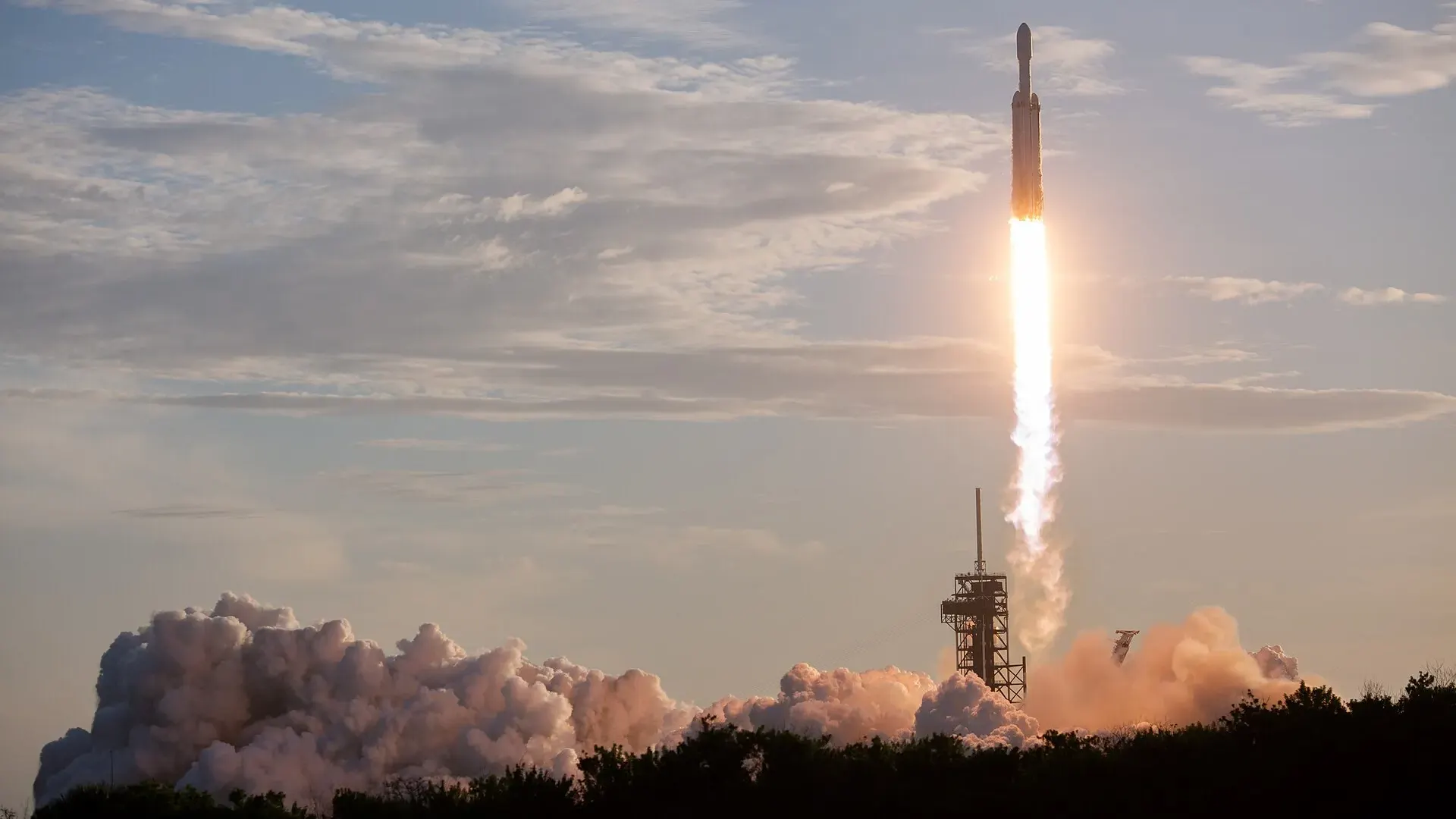
Roman launched on 30 August aboard a SpaceX Falcon Heavy rocket from Kennedy Space Center in Florida and is heading for an orbit nearly a million miles from Earth, where it will circle the Sun in step with our planet. Its 2.4-metre primary mirror began life as a surplus mirror built for a US spy satellite, according to Berkeley News.
Engineers switched the Wide Field Instrument on in September and spent the following weeks testing its 18 detectors, each about the size of a sticky note, along with its electronics and an element wheel that holds filters to separate light into colours. Internal LEDs, controlled from the ground, let the team measure how sensitivity varies from one detector to another.
Maxime Rizzo, another systems engineer on the instrument at Goddard, compared the work to preparing for a performance. "Calibrating an instrument is like tuning a piano or guitar before a concert," he said. Once set, the settings are left alone so the camera behaves the same way every time.
The focusing mechanism had been launched deliberately out of position. Engineers moved it to the predicted best focus and then adjusted the telescope's secondary mirror. "We moved the secondary mirror by about one-sixteenth of the diameter of a human hair," said Alden Jurling, a senior optical engineer on Roman. Scaled up to the height of the Empire State Building, NASA said, the shift would be smaller than the thickness of a penny.
The telescope performed well even before those adjustments, said Matthew Bolcar, Roman's optical systems lead, who credited years of ground testing with industry partners L3Harris and BAE Space and Mission Systems. "Our ground testing couldn't exactly reproduce the environment Roman would experience in space," he said, but the modelling left only small corrections to make in orbit.
"All of the images from Roman's cosmic surveys will be even sharper than we expected," Jurling said.
A second instrument, the Coronagraph, is designed to block starlight so that planets around other stars can be seen directly. NASA said it was found to be slightly out of focus after it received light for the first time on 22 September. The problem was simpler to fix than expected, the agency said, and the instrument now meets the team's expectations.
The mission traces its origins to a supernova probe proposed more than two decades ago by Saul Perlmutter, the Berkeley physicist who shared the 2011 Nobel Prize in physics. The concept was renamed several times, becoming WFIRST before NASA named it in 2020 for Nancy Grace Roman, the agency's first chief of astronomy.
Once science operations begin, Roman is expected to send back about 1.4 terabytes of data a day, all of it released to the public within 48 hours, according to Berkeley News. Jessica Lu, an associate professor of astronomy at Berkeley, co-leads the Roman Science Collaboration with David Weinberg of Ohio State University.
The telescope will carry out three major surveys. One will image six patches of the crowded centre of the Milky Way every 12 minutes for five years, watching for the brief brightening that occurs when a planet or a lone black hole passes in front of a background star. Berkeley News reported the survey is expected to capture about 30,000 such microlensing events, including several thousand planets and more than 100 Earth-mass worlds in Earth-like orbits, along with a few hundred dark black holes.
Another survey will measure Type Ia supernovae at distances corresponding to roughly six to ten billion years in the past, extending the kind of measurement that earned Perlmutter his Nobel.
Over the coming weeks the Coronagraph team will keep calibrating its camera settings and its deformable mirrors before attempting to demonstrate that the instrument can block starlight as designed, NASA said. The first of the big surveys could begin as early as December, according to Berkeley News.
Sources
- NASA Roman Team Checks Out Main Instrument, Sharpens Telescope's Focus (science.nasa.gov)
- How Berkeley shaped NASA's newest space telescope (news.berkeley.edu)
- NASA's Roman Space Telescope exceeds expectations by nearly 30% (sciencedaily.com)
- Nancy Grace Roman Space Telescope Launch (NHQ202608300021) (commons.wikimedia.org)
This report was compiled from the publicly available reporting listed above. Direct quotations are reproduced as published by those outlets. Corrections: see our corrections policy.