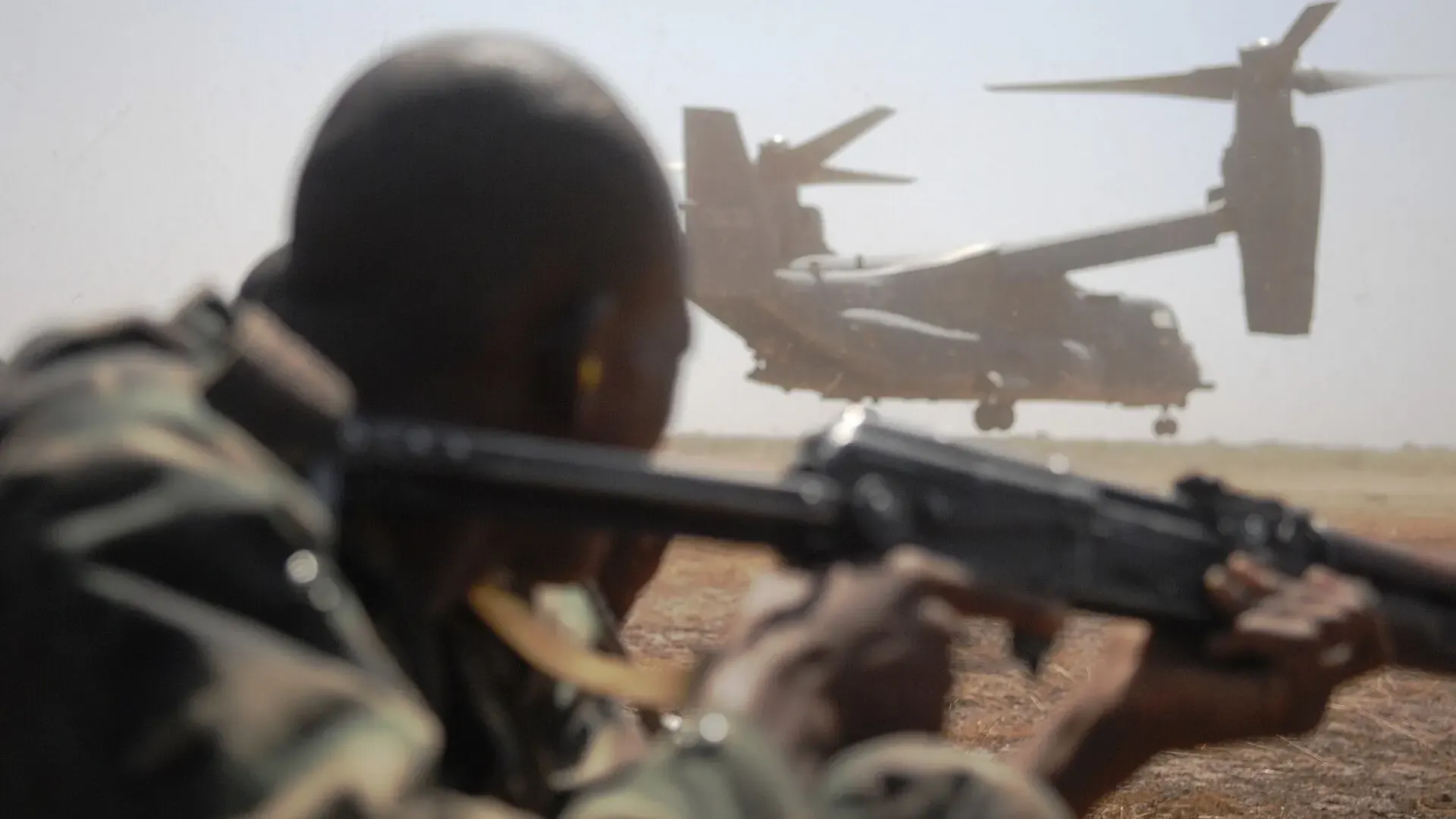
DAKAR — Mali's armed forces and their Russian allies in the Africa Corps have carried out apparently indiscriminate drone strikes that killed and wounded civilians during a stepped-up offensive against insurgents, Human Rights Watch said in a report published on Monday.
The group documented a strike on a cattle market in the central Bandiagara region on August 19 that killed six men and injured at least 20 people, and a pre-dawn attack on July 29 that partially destroyed a health centre in the northern Kidal region near the Algerian border. It also accused Islamist and separatist fighters of torturing and executing at least 19 captured Malian soldiers in July.
The findings add to pressure on a junta that has relied on Russian paramilitaries and Turkish-made drones since expelling French and United Nations forces, and they land as the military struggles to recover from the most serious insurgent offensive since it took power.
Citing data from the US-based conflict monitor ACLED, Human Rights Watch said Malian forces and the Africa Corps conducted 49 airstrikes that killed 89 civilians between April and August, compared with 22 strikes and 44 civilian deaths in the same period of 2025. Over the same five months, the data showed Malian forces killed 268 civilians and the al-Qaeda affiliate JNIM killed 134.
"The Malian military, armed groups, and insurgent forces are committing grave laws-of-war violations while international organizations and governments largely stand by," said Ilaria Allegrozzi, senior Sahel researcher at Human Rights Watch.
A Malian army spokesperson did not respond to a request for comment, Reuters reported. Human Rights Watch said it sent its findings and questions to Mali's new defence minister on August 5 and received no reply. The government has previously denied killing civilians in counterinsurgency operations. The Russian embassy in Bamako did not immediately respond to a request for comment on the Africa Corps' involvement.
The offensive followed coordinated nationwide attacks on April 25 by JNIM and fighters from the Tuareg-led Azawad Liberation Front, known as the FLA, that killed Mali's defence minister and struck towns, cities and the main airport in Bamako. The attackers sought to topple the junta led by Gen. Assimi Goïta, which seized power in coups in 2020 and 2021 and later turned to the Russian group formerly known as Wagner for support.
Human Rights Watch said it interviewed 30 people remotely between July 30 and September 20, including 16 witnesses, as well as human rights defenders, community leaders, journalists and a Malian soldier. It verified and geolocated two videos and analysed 12 photographs of drone debris.
At the Tombonkore market, witnesses told the group a grey drone circled for about 30 minutes before striking, and said no JNIM fighters were present. The dead were aged between 21 and 54. The army's chief of staff said on August 20 that forces had hit a "terrorist hideout" and "neutralized" about 20 "terrorists". Human Rights Watch said it could not identify the munition but that the Malian military and the Africa Corps are the only known operators of drones of that size in the country.
In Talahandak, in Kidal, photographs of debris were consistent with a Shahed-type one-way attack drone, the group said. A health worker told researchers: "Under no circumstances was this facility used by armed groups."
The report also described abuses on the ground. On July 12, soldiers near Niono in the Ségou region shot and killed five girls aged 10 to 13 who were harvesting rice about three kilometres from town. Soldiers later admitted they had mistaken the girls for attackers, Human Rights Watch said, but as of mid-September no investigation had been opened and no reparations offered. In Djenné, in the Mopti region, Dozo militiamen allied with the army killed three Fulani men on July 27 and 28, residents said.
On July 18, JNIM and FLA fighters ambushed an army and Africa Corps convoy at Tabrichat in the Gao region. Videos showed at least 19 soldiers who had surrendered being tortured and executed, and more than 50 were reported missing. The UN human rights office condemned the killings on July 23, and media reported that a prosecutor opened an investigation on August 1.
JNIM's Sharia Committee told Human Rights Watch on September 30 that the killings took place but that the group had not ordered them, saying "we did not give the order for it". FLA spokesperson Mohamed Elmaouloud Ramadane acknowledged clashes at Tabrichat on September 20 but said the group "categorically rejects" any allegation that its forces carried out executions.
Mali has flown Turkish Bayraktar TB2 drones since 2022 and larger Akinci drones since 2024, while Russia has supplied drones and fighter jets to the Africa Corps, according to the report.
Human Rights Watch called on the African Union Peace and Security Council to hold a dedicated session on civilian protection in Mali, adopt a communiqué condemning abuses by all sides, and press the authorities in Bamako to open independent investigations with support from AU human rights experts. "The AU Peace and Security Council should undertake sustained scrutiny of all parties," Allegrozzi said.
The council last discussed Mali at a session on April 28, three days after the insurgent offensive began, and the group said it should now follow through on the commitments it made there.
Sources
- Mali: Military Attacks on Civilians, Insurgent Abuses (hrw.org)
- Mali forces, Russian backers kill scores of civilians in drone strikes, report says (theprint.in)
- Russian-backed forces blamed for civilian deaths in Mali (timeslive.co.za)
- Malian Army, Rebels Committing Abuses Against Civilians - HRW (newscentraltv.com)
This report was compiled from the publicly available reporting listed above. Direct quotations are reproduced as published by those outlets. Corrections: see our corrections policy.